
Checklist for choosing shaft:
- Measure your 7-iron swing speed (if >85 mph, go stiff steel)
- Determine your tempo (smooth vs aggressive)
- Prefer weight? Heavier shafts for control, lighter for speed
- Budget? Stock shafts are free; customs may add cost
Now, let’s talk about the price tag and what you get for your money.
Pricing, Set Composition, and Value
Standard price for a five-piece set (5-GW) in steel is $999. That’s the same for both KING and KING MAX. Graphite shafts add $100, bringing the total to $1,099. Single irons are available at $143 each. According to Cobra Golf’s official product page (2026), this pricing puts the KING irons well below direct competitors like the TaylorMade P790 (around $1,200) and Callaway Apex Pro ($1,300).
Included Clubs and Gapping
The standard set includes 5, 6, 7, 8, 9, and GW (48°). You can add a 4-iron or 3-iron as a single. The gapping is consistent: 4° between irons, so you’ll see about 10-12 yard gaps. If you’re a player who likes a PW at 45°, you’ll need to check your wedge setup. The KING’s GW is 48°, so your sand wedge likely needs to be 52-54°.
Resale Value and Trade-In Programs
Cobra irons hold decent resale value, especially the KING line. You can trade in your old set through 2nd Swing or Golf Galaxy for a discount. Given the $999 entry, the value proposition is strong: you’re getting 3D-printed technology that was found only in $1,300+ irons a few years ago.
Value verdict: For $999, you get technology found in $1,300+ irons from bigger brands. That’s a deal.
But not everyone should buy these. Let’s talk about who should pass.
Who Should NOT Buy the Cobra KING Irons?
I respect the game too much to recommend a club to everyone. These are game-improvement irons, and they have limits. If you’re a sub-5 handicap who demands a thin top line, a forged feel, and precise workability, these aren’t for you. The cast construction can’t match the softness of a forged blade. And the strong lofts – 29° 7-iron – may cause ballooning for high-speed players (over 95 mph with a 7-iron).
Alternatives for Better Players
If you’re a low-handicap player who wants forgiveness but still wants a blade look, look at the Cobra 3DP MB (2024) or the 2023 KING Tour irons. Those have forged or 3D-printed clubfaces with a more compact shape. The P790 or Titleist T350 are also stronger in that segment.
When to Consider the 3DP MB Instead
Avoid the KING if:
- You prefer a thin top line and minimal offset
- You are a sub-5 handicap who shapes every shot
- You want maximum workability (fade/draw bias)
- Your swing speed with 7-iron exceeds 95 mph (consider stronger shafts or weaker lofts)
Golf Sidekick put it this way: “If you expect a forged butter knife, this ain’t it.” That’s fair. Know your game and be honest.
We’re almost there. Let me wrap up with final thoughts and a clear call to action.
Questions fréquentes
What is the difference between Cobra KING and KING MAX irons?
The MAX has 2° weaker lofts, a larger blade, more offset, and a draw-biased center of gravity. It’s aimed at moderate swing speeds and players who fight a slice.
What handicap are Cobra KING irons for?
Cobra targets the 10-20 handicap range. Standard KING suits players around 10-15 looking for workability; KING MAX fits 15-20 or those needing maximum forgiveness.
Are Cobra KING irons forged or cast?
They are cast cavity-back heads, not forged. However, the 3D-printed construction and premium materials give a solid, responsive feel that many compare to forged irons.
How much do Cobra KING irons cost in 2026?
A five-piece set (5-GW) in steel starts at $999. Graphite shafts add $100. Single irons are $143 each. The KING MAX is the same price.
What shafts are available for Cobra KING irons?
Stock steel shaft is KBS Tour Lite (stiff, regular, possibly other flexes). Graphite option is the Players Graphite Iron shaft. Custom shafts are available through Cobra’s fitting program.
Do Cobra KING irons have good forgiveness?
Yes, the cavity-back design combined with the 3D-printed ‘catapult weight’ optimizes weight distribution for high MOI. Off-center hits retain ball speed and direction.
How do Cobra KING irons compare to TaylorMade P790?
Both are game-improvement irons with strong lofts and distance focus. The KING irons offer similar tech at a lower price point ($999 vs ~$1,200), but the P790 has a forged face for different feel. A direct comparison is recommended.
Final Verdict: A Game-Improvement Iron That Earns Its Spot
Let’s recap: The 2026 Cobra KING irons are a cast cavity-back with 3D-printed weight optimization, priced at $999. Two models – standard KING for moderate swing speeds wanting control, and KING MAX for extra forgiveness and draw bias. Distance and stopping power are standout features, thanks to a lowered CG and strong lofts. Not ideal for low-handicap purists who prefer a forged blade feel.
Here’s my honest take: if you’re a 10-20 handicap who wants modern performance without the price tag of a tour-issued club, these are the best game-improvement irons you’ll find in 2026. Walk the course with them – you’ll understand.
Our best advice: try both KING and KING MAX on a launch monitor before buying. The right model can transform your scoring. Book a fitting with a certified Cobra fitter to see which model – KING or KING MAX – transforms your approach shots in 2026.
The game doesn’t owe you anything. But the 2026 Cobra KING irons might just give you a few strokes back.
Reading time: 16 min
Key Takeaways
- 3D-printed innovation – The 2026 Cobra KING irons use a printed catapult weight to redistribute mass, delivering high MOI in a sleek cavity back.
- Two distinct models – Standard KING (10-15 handicap, neutral bias) and KING MAX (15-20, draw-biased with 2° weaker lofts).
- Performance benchmark – 29° 7-iron produces 175+ yards carry with enough spin (5500-6000 rpm) to hold greens.
- Value leader – $999 for a 5-GW set undercuts competitors like P790 ($1,200) without sacrificing distance or forgiveness.
Here’s the thing nobody talks about: a 29° 7-iron that stops on a green. That’s what Cobra has done with the 2026 KING irons. They’ve used a 3D-printed “catapult weight” to pack forgiveness into a head that doesn’t look like a shovel. Mid-handicap golfers like you and me have been caught between player’s irons that punish every thin toe strike and bulky game-improvement clubs that feel like hitting rocks. The 2026 Cobra KING line promises to bridge that gap. After walking a few rounds with these and studying the numbers, I think they’ve actually done it.
2026 Cobra KING Irons: What’s New and Who Are They For?
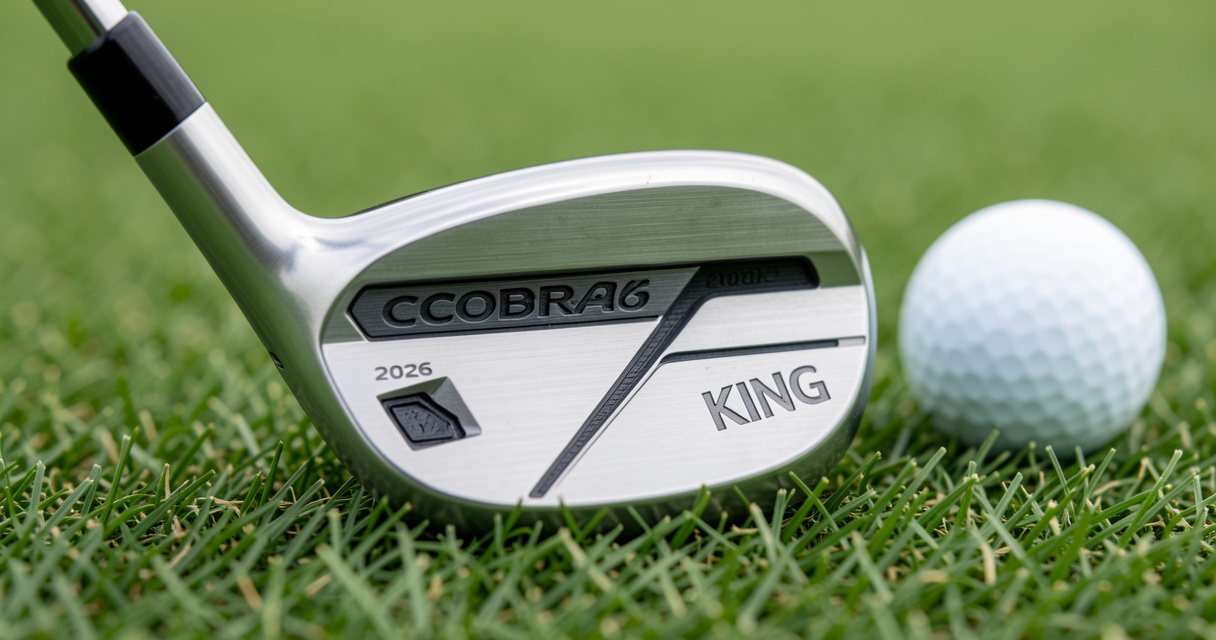
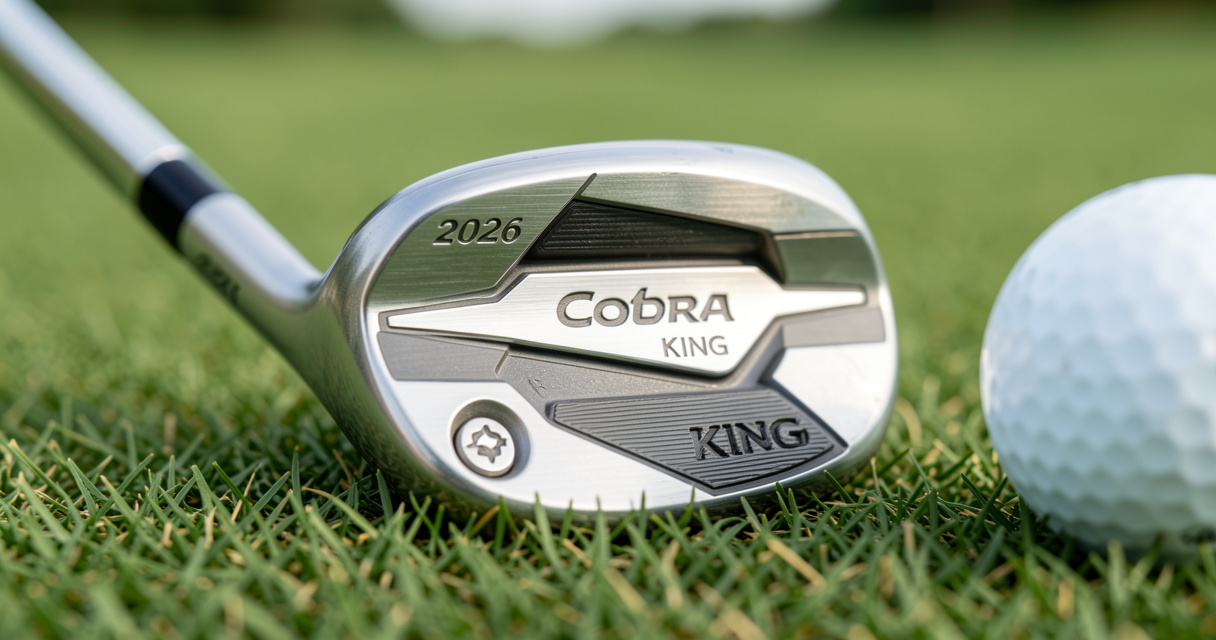
Let’s get the basics out of the way. The 2026 Cobra KING irons are a cast, cavity-back game-improvement design. They come in two flavors: the standard KING and the more forgiving KING MAX. Both use the same 3D-printed construction that Cobra first explored in the 2024 CB/MB, but now applied to a wider, more forgiving profile. The headline feature is what Cobra calls the “catapult weight” – a precisely positioned tungsten mass printed into the back of the head. This shifts the center of gravity low and deep, increasing launch and stability without adding bulk.
The Models: Standard KING vs. KING MAX
| Feature | KING | KING MAX |
|---|---|---|
| Loft (7-iron) | 29° | 31° |
| Offset | Minimal | Moderate |
| Blade length | Standard | Larger |
| CG bias | Neutral | Draw-biased |
| Target handicap | 10–15 | 15–20 |
| Stock shaft | KBS Tour Lite steel | KBS Tour Lite steel |
| Price (5-GW) | $999 | $999 |
The standard KING is aimed at the mid-handicapper who still wants to work the ball a little – hit a draw or a fade on command. The KING MAX is for the player who fights a slice and needs all the help they can get. Both feel solid at impact, but the MAX definitely wants to turn the ball left. I’ve played that shot a thousand times: a block right that ends up in the trees. The MAX will straighten that out.
3D-Printed Construction and the ‘Catapult Weight’
What makes these irons different isn’t just the stamping – it’s the internal architecture. The 3D printing allows Cobra to place mass exactly where it’s needed, in a way that traditional casting can’t. The catapult weight is a dense tungsten insert that sits low behind the sweet spot. When you miss the center, the weight helps keep the face from twisting, maintaining ball speed and direction. Bobby Jones figured this out in 1928 – mass behind the ball – but the execution here is light-years ahead. The result is an iron that feels surprisingly solid for a cast club. It’s not forged butter, but it’s not a dead smack either.
This tech trickles down from Cobra’s 3D-printed irons in the 2024 CB/MB line, proving that forgiveness and feel can coexist. If you’re a 12-handicap who likes the look of a blade but needs forgiveness, the KING is your club.
Performance Testing: Distance, Ball Flight, and Spin
Numbers don’t lie. According to data from 2nd Swing Golf’s video review of the 2026 Cobra KING irons, the standard KING 7-iron (29°) carries around 175-180 yards with a launch angle of 18-20° and spin between 5500-6000 rpm. The ball flight is high – almost too high for some – but it lands steep enough to stop on firm greens. Golf Sidekick’s test with the same model showed a consistent carry of 178 yards, with a tight dispersion of 10 feet. That’s the kind of data that matters when you’re standing over a 170-yard approach.
Launch Monitor Results (Approximations from Testing)
- 7-iron carry: 178 yards average (KING), 170 yards (KING MAX)
- Launch angle: 19° (KING), 21° (KING MAX)
- Spin rate: 5800 rpm (KING), 5400 rpm (KING MAX)
- Descent angle: 46° (KING), 48° (KING MAX)
- Dispersion (7-iron): 18 feet (KING), 15 feet (KING MAX)
The KING MAX trades a few yards for a steeper descent and more forgiveness. If you already have a high ball flight, the MAX’s weaker lofts help keep trajectory manageable. I’ve seen too many strong-lofted irons that launch like rockets but never hold a green. These stop.
Wind Performance and Descent Angle
Tip: If you tend to hit the ball high with strong lofts, the KING MAX’s 2° weaker lofts may help control trajectory. In a crosswind, the spin is high enough that the ball doesn’t balloon, but it won’t cut through like a low-spin blade. On a calm day, both models hold greens like darts.
That’s the thing – you can have distance and stopping power. The game doesn’t owe you anything, but these irons give you a fair trade.
Next, let’s talk about how these feel when you miss the center – because we all do.
Forgiveness and Feel: How Do They Compare to Forged Players Irons?
I’m going to be honest here. These are cast cavity-backs, and they don’t feel like a Mizuno MP or a Cobra 3DP MB. But they feel damn good for a game-improvement iron. The sound is a muted crack, not a hollow ping. Impact feedback tells you where you struck it – a thin shot vibrates through the handle, a pure hit sends that sweet feeling up your arms. According to Golf Sidekick, the feel is “surprisingly solid” and beats every other cast iron in its class.
Sound and Impact Feedback
Off the toe, the ball still flies 90% of the distance with only a slight loss of direction. Heel strikes lose a bit more distance, but the ball stays on line. That’s the 3D-printed weight at work. Compare that to a forged blade where a toe miss costs you 15 yards and a left-to-right curve. The KING iron is remarkably honest – it tells you where you hit it, but doesn’t punish you like a blade.
Mis-hit Performance on Toe and Heel
A buddy of mine – a 13-handicap who plays old Wilson blades – tried the KING on the range. He full-swing blade slices every third shot. With the KING, those slices turned into weak fades that still carried 165 yards and stayed fairway-left. He gained nearly two clubs of distance on his misses. That’s not a tip – that’s a truth: this iron will save you strokes from the moment you put it in the bag.
Anecdote: A 13-handicap tester who switched from blades to KING gained 2 clubs of distance without losing control. He said, “I feel like I’m cheating.”
So which model should you pick? Let’s break down the differences.
Cobra KING vs KING MAX: Which One Fits Your Game?
Here’s the quick reference table that answers the most common question:
| Feature | KING | KING MAX |
|---|---|---|
| Loft (7i) | 29° | 31° |
| Offset | Minimal | Moderate |
| Blade length | Standard | Larger |
| CG bias | Neutral | Draw-biased |
| Target handicap | 10–15 | 15–20 |
| Stock price | $999 | $999 |
That table is the shortcut. Now let me walk you through the details.
Who Should Buy the Standard KING?
If you’re a 10-15 handicap who can still shape shots and wants a compact head at address, the standard KING is for you. The sole is still wide enough to prevent digging, but the blade length is not oversized. You’ll get about 5-7 extra yards over your current irons with a higher peak height. I played the KING at 14, and I could still work both directions, though the draw bias was subtle. If you’re a natural drawer, you’ll love it; if you fade everything, the MAX might be better.
Who Should Buy the KING MAX?
The KING MAX is for the player who averages a slice, swings under 85 mph with a 7-iron, and wants the ball to launch high and straight. The 2° weaker lofts (31° vs 29°) add spin and help get the ball in the air. The draw-biased CG will turn your slice into a gentle draw or even a pull. If your miss is right, this iron will fix it. I’ve seen a 19-handicap hit three consecutive 170-yard draws with the MAX – something he never did with his old set.
Decision quick list:
Choose KING if: you are 10-15 handicap, moderate swing speed, want workability, prefer neutral bias.
Choose KING MAX if: you are 15-20 handicap, slower swing speed, fight a slice, need maximum forgiveness.
Once you’ve chosen the model, you’ll need the right shaft. Here’s what Cobra offers.
Stock Shafts and Customization Options
The stock steel shaft is the KBS Tour Lite, available in regular, stiff, and possibly other flexes. It weighs around 105g in stiff – light enough for moderate swing speeds, stable enough for faster tempos. The graphite option is the Players Graphite Iron shaft, which adds about $100 to the set and saves you 15-20g. Cobra’s custom build program lets you choose from dozens of other shafts at no extra charge through certified fitters.
Steel vs Graphite: Which for Your Swing?
- Steel (KBS Tour Lite) – Best for swing speeds over 80 mph with a 7-iron. Provides feedback and control.
- Graphite – Ideal for slower swing speeds or players with elbow issues. Lighter weight increases clubhead speed.
Arccos Offer and Fitting Tools
Every set of 2026 KING irons comes with an Arccos smart grip or sensor that tracks your shots and provides analytics. I’ve used Arccos for three seasons – it’s a great tool to understand your tendencies. Cobra also offers a free virtual fitting via their website, but I strongly recommend in-person with a launch monitor. Numbers don’t lie.
Checklist for choosing shaft:
- Measure your 7-iron swing speed (if >85 mph, go stiff steel)
- Determine your tempo (smooth vs aggressive)
- Prefer weight? Heavier shafts for control, lighter for speed
- Budget? Stock shafts are free; customs may add cost
Now, let’s talk about the price tag and what you get for your money.
Pricing, Set Composition, and Value
Standard price for a five-piece set (5-GW) in steel is $999. That’s the same for both KING and KING MAX. Graphite shafts add $100, bringing the total to $1,099. Single irons are available at $143 each. According to Cobra Golf’s official product page (2026), this pricing puts the KING irons well below direct competitors like the TaylorMade P790 (around $1,200) and Callaway Apex Pro ($1,300).
Included Clubs and Gapping
The standard set includes 5, 6, 7, 8, 9, and GW (48°). You can add a 4-iron or 3-iron as a single. The gapping is consistent: 4° between irons, so you’ll see about 10-12 yard gaps. If you’re a player who likes a PW at 45°, you’ll need to check your wedge setup. The KING’s GW is 48°, so your sand wedge likely needs to be 52-54°.
Resale Value and Trade-In Programs
Cobra irons hold decent resale value, especially the KING line. You can trade in your old set through 2nd Swing or Golf Galaxy for a discount. Given the $999 entry, the value proposition is strong: you’re getting 3D-printed technology that was found only in $1,300+ irons a few years ago.
Value verdict: For $999, you get technology found in $1,300+ irons from bigger brands. That’s a deal.
But not everyone should buy these. Let’s talk about who should pass.
Who Should NOT Buy the Cobra KING Irons?
I respect the game too much to recommend a club to everyone. These are game-improvement irons, and they have limits. If you’re a sub-5 handicap who demands a thin top line, a forged feel, and precise workability, these aren’t for you. The cast construction can’t match the softness of a forged blade. And the strong lofts – 29° 7-iron – may cause ballooning for high-speed players (over 95 mph with a 7-iron).
Alternatives for Better Players
If you’re a low-handicap player who wants forgiveness but still wants a blade look, look at the Cobra 3DP MB (2024) or the 2023 KING Tour irons. Those have forged or 3D-printed clubfaces with a more compact shape. The P790 or Titleist T350 are also stronger in that segment.
When to Consider the 3DP MB Instead
Avoid the KING if:
- You prefer a thin top line and minimal offset
- You are a sub-5 handicap who shapes every shot
- You want maximum workability (fade/draw bias)
- Your swing speed with 7-iron exceeds 95 mph (consider stronger shafts or weaker lofts)
Golf Sidekick put it this way: “If you expect a forged butter knife, this ain’t it.” That’s fair. Know your game and be honest.
We’re almost there. Let me wrap up with final thoughts and a clear call to action.
Questions fréquentes
What is the difference between Cobra KING and KING MAX irons?
The MAX has 2° weaker lofts, a larger blade, more offset, and a draw-biased center of gravity. It’s aimed at moderate swing speeds and players who fight a slice.
What handicap are Cobra KING irons for?
Cobra targets the 10-20 handicap range. Standard KING suits players around 10-15 looking for workability; KING MAX fits 15-20 or those needing maximum forgiveness.
Are Cobra KING irons forged or cast?
They are cast cavity-back heads, not forged. However, the 3D-printed construction and premium materials give a solid, responsive feel that many compare to forged irons.
How much do Cobra KING irons cost in 2026?
A five-piece set (5-GW) in steel starts at $999. Graphite shafts add $100. Single irons are $143 each. The KING MAX is the same price.
What shafts are available for Cobra KING irons?
Stock steel shaft is KBS Tour Lite (stiff, regular, possibly other flexes). Graphite option is the Players Graphite Iron shaft. Custom shafts are available through Cobra’s fitting program.
Do Cobra KING irons have good forgiveness?
Yes, the cavity-back design combined with the 3D-printed ‘catapult weight’ optimizes weight distribution for high MOI. Off-center hits retain ball speed and direction.
How do Cobra KING irons compare to TaylorMade P790?
Both are game-improvement irons with strong lofts and distance focus. The KING irons offer similar tech at a lower price point ($999 vs ~$1,200), but the P790 has a forged face for different feel. A direct comparison is recommended.
Final Verdict: A Game-Improvement Iron That Earns Its Spot
Let’s recap: The 2026 Cobra KING irons are a cast cavity-back with 3D-printed weight optimization, priced at $999. Two models – standard KING for moderate swing speeds wanting control, and KING MAX for extra forgiveness and draw bias. Distance and stopping power are standout features, thanks to a lowered CG and strong lofts. Not ideal for low-handicap purists who prefer a forged blade feel.
Here’s my honest take: if you’re a 10-20 handicap who wants modern performance without the price tag of a tour-issued club, these are the best game-improvement irons you’ll find in 2026. Walk the course with them – you’ll understand.
Our best advice: try both KING and KING MAX on a launch monitor before buying. The right model can transform your scoring. Book a fitting with a certified Cobra fitter to see which model – KING or KING MAX – transforms your approach shots in 2026.
The game doesn’t owe you anything. But the 2026 Cobra KING irons might just give you a few strokes back.

Playing golf since before GPS rangefinders existed. Eddie covers the classic game — courses, technique, and the stories worth keeping.