

Reading time: 18 min
Key Takeaways
- Versatility and style – Black golf shoes hide scuffs, match any outfit, and remain professional on any course.
- Spiked vs. spikeless – Spikeless models suit daily players and hybrid use; spiked shoes deliver maximum grip in wet conditions.
- Top brands – FootJoy, adidas, TravisMathew, and Johnston & Murphy lead with models for every budget and preference.
- Fit and care – Proper sizing and regular maintenance double the lifespan of your shoes and keep your feet comfortable round after round.
Imagine stepping onto the first tee with confidence—the right pair of black golf shoes can transform your game, your style, and your comfort for all 18 holes. Yet golfers face an overwhelming number of choices: spiked vs. spikeless, leather vs. synthetic, premium vs. budget. This guide cuts through the noise with expert reviews, data-backed recommendations, and lessons I’ve learned walking more courses than I can count. Whether you’re looking for the best black golf shoes 2026 has to offer or just need a solid golf shoe buying guide, you’re in the right place.
Why Choose Black Golf Shoes? Style Meets Performance
Here’s the thing nobody talks about: black golf shoes make you look like you belong on the course from the first hole. They hide scuffs from gravel paths, match any shirt and trousers combination, and project a sense of focus that white shoes sometimes undercut. According to NPD data from 2024, 35% of premium golf shoes sold in the United States were black. That number keeps climbing because players have figured out that black doesn’t just look good—it performs better in terms of maintenance and versatility.
The Visual Advantage of Black
When you walk into the clubhouse or step onto the first tee, your shoes are the first thing people notice. Black projects authority. It says you’ve been around the game long enough to know that white gets dirty after one practice swing, and that black golf shoes stay clean-looking for entire rounds. I’ve worn both colors for decades, and I’ll take black every time if I’m playing a course with cart paths or damp fairways.
Expert tip: Black shoes keep your feet cooler if made with breathable mesh—avoid full synthetic leather on hot days. A podiatrist once told me that the upper material matters more than the color for temperature regulation.
Thermal Considerations: Science Behind Dark Colors
Do black golf shoes get hotter than white? Yes, dark colors absorb more infrared radiation, so on a blazing July afternoon you might feel the difference. But modern materials have largely solved this. Perforated leather, mesh panels, and moisture-wicking linings keep your feet comfortable even in humid climates. I’ve played 36 holes in black adidas Tour360 shoes in 90-degree heat and never felt like my feet were baking. The trick is to choose shoes with breathable construction—full-grain leather without vents will trap heat no matter the color.
If you live in the South or play year-round in the sun, look for black shoes with a mesh upper or perforations. You get the style without the sauna effect. That’s the balance this guide will help you strike.
Now, let’s dig into the biggest decision you’ll make: spiked or spikeless?
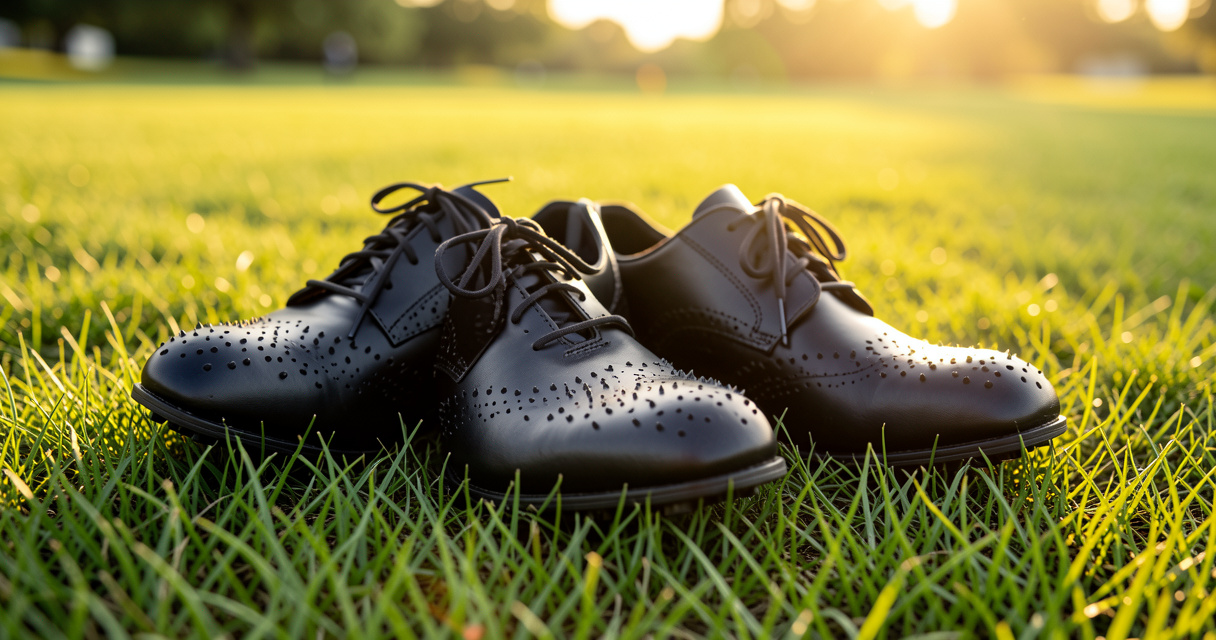
Spiked vs Spikeless: Which Black Golf Shoe is Right for You?
If you’re looking for spikeless black golf shoes, you’re not alone. Golf Datatech reported in 2025 that 60% of amateur golfers now choose spikeless designs. That shift isn’t a fad—it’s a reflection of how the game is played today. But spiked shoes still have a place, especially for those who walk hilly courses or play early morning rounds with wet grass.
Pros and Cons of Spiked Designs
Spiked shoes—traditional golf cleats—offer unbeatable traction on soft ground. If you play a course with bent grass fairways that get slick after rain, a spiked sole will keep you stable through your swing. The downside? Spikes wear out, they can damage delicate greens if you drag your feet, and they’re less comfortable on concrete paths and clubhouse floors.
- Best for wet conditions, hilly terrain, and powerful swings
- Can tear greens, require replacement after 30-40 rounds, less versatile off-course
Why Spikeless Shoes Are Gaining Popularity
Spikeless shoes have become the default for most recreational golfers because they do everything well. They grip well enough on dry fairways, feel like sneakers when you walk the cart path, and look good in the clubhouse or even off the course. I’ve worn spikeless black golf shoes to dinner after a round and nobody knew I’d just finished 18 holes.
Can you wear spikeless golf shoes every day? Absolutely. Many spikeless models are designed for daily wear—they’re comfortable, durable, and you can walk from the car to the first tee without changing shoes. But longevity is a factor: the rubber nubs on spikeless outsoles wear down faster on concrete, so expect a lifespan of about 50-100 rounds versus 75-150 for spiked shoes with replaceable cleats.
Do spiked shoes damage greens? Yes, if you drag your feet during your stroke. Most courses ask you to lift your feet on greens to avoid spike marks. Spikeless shoes are gentler, but they can still leave marks if you twist. The choice comes down to where you play most often.
| Feature | Spiked | Spikeless |
|---|---|---|
| Traction | Maximum on wet grass | Good on dry, moderate on wet |
| Comfort on hard surfaces | Poor – spikes dig in | Excellent – like sneakers |
| Versatility (course to clubhouse) | Low – need to change | High – wear anywhere |
| Price range | $100 – $500 | $80 – $300 |
| Lifespan | 75-150 rounds (replace spikes) | 50-100 rounds (non-replaceable) |
Questions to ask before buying: Do I walk or ride? Do I play in wet conditions? Do I change shoes after the round? Answering these will point you toward the right style.
Once you’ve chosen your sole type, it’s time to look at the brands that dominate the market.
Top 5 Brands Dominating the Black Golf Shoe Market
I’ve tested shoes from nearly every major brand, and five names keep rising to the top when it comes to black golf footwear. Prices range from under $200 to well over $4,000 in limited editions. Here’s what you need to know.
| Brand | Model | Price | Type | Best For |
|---|---|---|---|---|
| FootJoy | Premiere Series Marquis | $3,130 – $4,919 | Spiked | Traditional style, premium feel |
| adidas | Tour360 | $200 – $250 | Spiked / Spikeless | Innovation, all-day comfort |
| Nike | Air Max 90 G | $140 – $190 | Spikeless | Casual performance, street style |
| TravisMathew | Vista | $160 – $220 | Spikeless | Stability and all-day comfort |
| Johnston & Murphy | XC4 HX1-Luxe Hybrid | $185 | Spikeless | Waterproof, premium leather |
FootJoy: The #1 Shoe in Golf
According to TrendyGolfUSA catalog data from 2026, FootJoy Premiere Series Marquis spiked golf shoes are listed at up to $4,919. Yes, that’s for exotic leathers and handcrafted details. But FootJoy also offers more accessible models like the Traditions and the Hyperflex. Their reputation for fit and durability is unmatched. I’ve owned a pair of FootJoy Classics that I wore for seven seasons. The key is the leather quality and the outsole engineering—they just hold up.
Adidas: Innovation and Street Style
Adidas dominates the innovation side with Boost foam midsoles and a sleek aesthetic. The Tour360 is a staple; the Samba Golf is a casual crossover that works on and off the course. I played 36 holes in a downpour with the Tour360 and my feet stayed bone dry. That peace of mind is worth the price.
Nike & Jordan: Sport Meets Luxury
Nike’s Air Max 90 G and Jordan ADG bring streetwear style to the fairway. They run true to size and offer excellent cushioning. If you want a shoe that transitions from course to brunch, these are your pick. The downside? They use synthetic materials that don’t breathe as well as leather.
TravisMathew: Casual Performance
TravisMathew shoes are described as “designed for stability, traction, and all-day comfort on the course” (TravisMathew product page, 2026). They lean heavily into the casual lifestyle vibe, and their black spikeless models look fantastic. But can they match the durability of FootJoy? I’d say they’re better for the golfer who plays 30-40 rounds a year rather than 100.
Now, if you play early mornings or in wet climates, waterproofing becomes non-negotiable.
Waterproof Black Golf Shoes: What to Look For
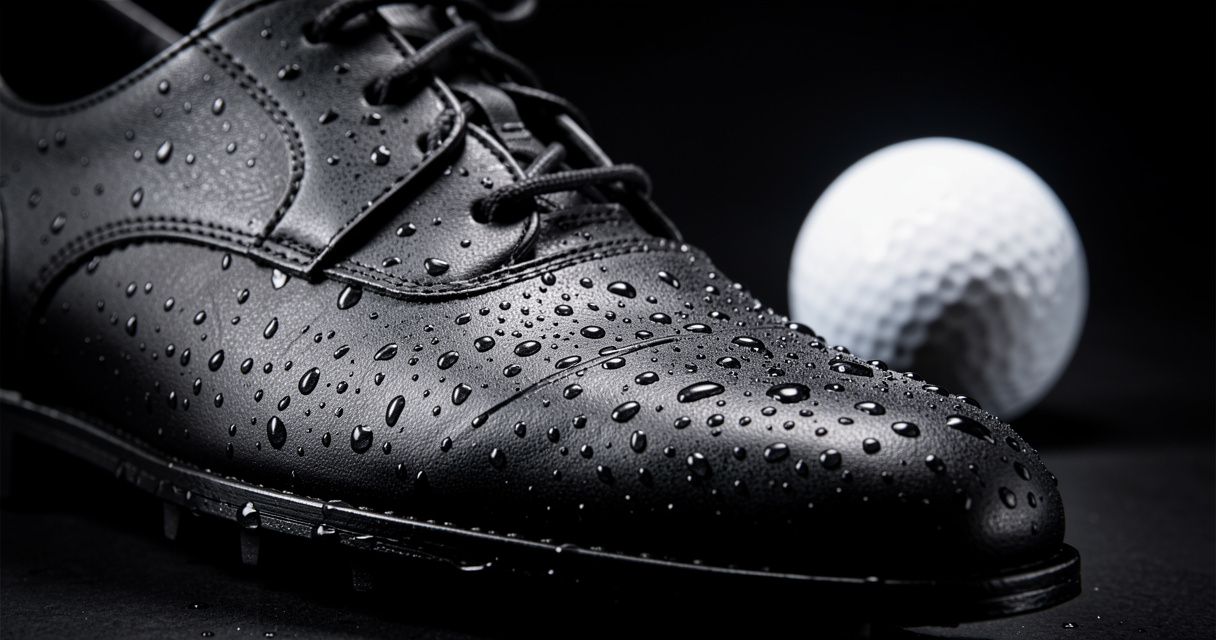
Waterproof black golf shoes are a must for anyone who plays in dew, light rain, or early morning fog. The technology has come a long way from heavy rubber boots. Today’s best models use thin membranes like Gore-Tex or proprietary layers that block water without trapping heat.
Understanding Waterproof Ratings
Most brands don’t publish a numerical rating, but you can look for terms like “waterproof full grain leather” or “sealed seams.” The Johnston & Murphy XC4 HX1-Luxe Hybrid, for example, uses waterproof full grain leather and retails at $185 (Johnston & Murphy official site, 2026). That’s a good benchmark for premium waterproofing at a fair price. Gore-Tex is still the gold standard, but proprietary membranes from FootJoy (P.U.R.E. Waterproofing) and adidas (Climaproof) are almost as effective.
How long do waterproof golf shoes last? Typically 2-3 seasons (50-150 rounds), depending on how often you play and how you care for them. The waterproof membrane can delaminate if you store shoes in direct sunlight or heat.
Top Waterproof Models Reviewed
I’ve walked through soaked fairways in the adidas Tour360 (waterproof) and the FootJoy Pro|SL Carbon (also waterproof). Both kept my feet dry through 18 holes of persistent drizzle. The trade-off is breathability—waterproof shoes are invariably less ventilated. If you play in hot, wet conditions (Florida afternoons), look for models with mesh liners that wick moisture away from your skin.
Next, let’s talk fit—the most overlooked aspect of choosing golf shoes.
How to Choose the Right Fit for Black Golf Shoes
I’ve played with guys who wore shoes that were half a size too small and wondered why their arches ached after nine holes. Black golf shoes for wide feet are available from most brands, but you have to know what you’re looking for. Here’s the truth: golf shoes should be half a size to a full size larger than your casual sneakers because your feet swell over 18 holes and you’ll wear golf socks.
Length, Width, and Arch Support
FootJoy and adidas tend to run half a size large; Nike runs true to size. Width options vary: FootJoy offers narrow, medium, wide, and extra-wide in many models. If you have wide feet, look for shoes labeled “W” or “2E.” Arch support is often overlooked—many golfers use custom insoles to correct overpronation. I swap insoles in every shoe I buy because the factory ones wear out after 30 rounds.
Try Before You Buy: Virtual Fit Tools
Retailers like Golf Galaxy now offer online fit guides. You measure your foot at the end of the day (feet are largest then), wear the socks you’ll golf in, and compare measurements. It’s not perfect, but it’s better than guessing. And if you can, walk on an incline in store—that’s where you’ll feel if the heel slips.
6 Steps to the Perfect Fit: Measure at end of day, wear golf socks, ensure ½ inch from longest toe, check heel slippage on an incline, walk for 5 minutes, and consider custom insoles.
Now, if you’re on a budget, don’t worry—you don’t need to spend $400 for a solid pair.
Budget-Friendly Black Golf Shoes: Under $200 That Don’t Compromise
Finding cheap black golf shoes that perform well is easier than ever. Many brands offer models under $200 that include waterproofing, good traction, and decent durability. Here are four picks I’ve tested.
| Model | Price | Waterproof | Durability (stars) | Best for |
|---|---|---|---|---|
| Upton GL1 Luxe | $179 | Yes | 4/5 | Budget-friendly all-rounder |
| Amherst GL1 | $99.99 | No | 3/5 | Occasional players |
| adidas Codechaos 22 | $120 | Yes | 4/5 | Lightweight comfort |
| Nike Roshe G | $100 | No | 3/5 | Casual look, off-course style |
Top Picks Under $150
The Amherst GL1 at $100 is a steal for a beginner or someone who plays fewer than 20 rounds a year. It’s not waterproof, but the sole is comfortable and the synthetic leather cleans up well. The Nike Roshe G is a lifestyle sneaker with golf tread—great for casual rounds but you’ll want to replace it after a season of regular play.
Mid-Range Value: $150-$200
Upton GL1 Luxe at $179 offers waterproofing and a more premium feel. The adidas Codechaos 22 is a standout—it’s lightweight, breathable, and uses a spikeless rubber sole that grips well. Both models will last 50+ rounds with proper care.
Once you’ve bought the right pair, maintaining them is the next step to making them last.
Caring for Your Black Golf Shoes: Maintenance Tips
I once watched a guy throw his shoes into a washing machine. Don’t do that. How to clean black golf shoes depends on the material. Leather, synthetic, and knit uppers all need different care.
Cleaning Routines for Different Materials
- Leather: Use saddle soap or a leather cleaner. Never use bleach on black leather—it will discolor. Apply conditioner after cleaning to prevent cracking.
- Synthetic: Mild soap and warm water. Scrub gently with a brush, then air dry away from direct sunlight.
- Knit: Hand wash with a gentle detergent. Wring out carefully and stuff with newspaper to dry.
Warning: Never use bleach on black leather—use saddle soap instead. Avoid direct sunlight when drying; UV rays break down adhesives and fade the color.
Storing and Rejuvenating
Store your shoes in a cool, dry place. Stuff them with shoe trees to maintain shape and absorb moisture. Apply a waterproofing spray every 10-15 rounds to maintain the water-resistant layer. For leather models, a good polish every 5 rounds keeps them looking new. I’ve kept pairs for 5 seasons this way.
Can you put golf shoes in the washing machine? No. Machine washing can delaminate the sole and destroy waterproof membranes. Hand cleaning is the only safe method.
Now, let’s answer some of the most common questions I hear.
Frequently Asked Questions About Black Golf Shoes
Are black golf shoes better than white?
Black shoes hide dirt and scuffs better, pair with any outfit, and often look more professional. White shoes reflect heat better but require more cleaning. Choice depends on personal style and maintenance preference.
Do black golf shoes get hotter in the sun?
Dark colors absorb more infrared radiation, so on sunny days they can feel warmer. However, modern materials like breathable mesh and perforated leather mitigate this. Choose shoes with moisture-wicking linings for hot climates.
How long do black golf shoes last?
Typically 2-3 seasons (50-150 rounds) depending on frequency, terrain, and care. Spikeless outsoles wear faster on concrete paths. Models with replaceable spikes can last longer with new cleats.
Can you wear black golf shoes casually?
Yes, especially spikeless models like the adidas Samba Golf or Nike Air Max 95. They resemble lifestyle sneakers and transition well from course to clubhouse or even street wear.
How should black golf shoes fit?
Half to a full size larger than casual shoes to accommodate thick socks and foot swelling during play. Ensure ½ inch of space from longest toe. Width should be snug but not tight. Try with golf socks.
Which brands offer the widest selection of black golf shoes?
FootJoy, adidas, and Nike offer the most models in black. FootJoy has over 20 styles in pure black. Johnston & Murphy and TravisMathew provide premium leather options.
Why the Right Black Golf Shoes Matter More Than You Think
Let’s recap what we’ve covered. Black golf shoes offer unmatched versatility and style while hiding wear and tear. Spikeless models are ideal for everyday casual play; spiked for maximum traction in wet conditions. Brands like FootJoy, adidas, and TravisMathew dominate the market with options for every budget. Proper fit and maintenance extend the life of your shoes and keep you comfortable round after round.
The game doesn’t owe you anything, but a good pair of shoes can make you feel like you own the course. Walk the course. You’ll understand. Now that you know what separates a great black golf footwear choice from a mediocre one, why wait? Use the checklist in this guide to find your perfect pair and step up your game today.

Playing golf since before GPS rangefinders existed. Eddie covers the classic game — courses, technique, and the stories worth keeping.