
Reading time: 15 min
Key Takeaways
- Physics of blades – smaller sweet spot, lower MOI, higher COG cause more distance loss on mishits.
- Quantified penalties – blades lose ~15–20% more distance on off-center strikes vs cavity backs.
- Psychology matters – confidence and feedback can outweigh pure forgiveness for some players.
- Who should play – handicap under 10, swing speed >85 mph, consistent ball striker.
What Makes Blades Harder to Hit? The Core Physics
Blades are harder to hit because they have a smaller sweet spot, concentrated mass behind the center, and a lower moment of inertia. This combination means off-center strikes lose more distance, feel harsher, and produce less consistent ball flight compared to cavity back irons, which redistribute weight to the perimeter for greater forgiveness. It’s not just a rumor — it’s a measurable engineering truth.
Sweet Spot Size and Location
The sweet spot on a blade is roughly the size of a dime. On a cavity back, it’s nearer a quarter. That difference alone means the margin for error is razor-thin. I’ve played shots with a 1953 Hogan blade that felt like striking a brick – you knew exactly where you missed it. The modern blade is slightly bigger in face area, but the effective sweet spot remains tight because the mass sits directly behind the center.
Moment of Inertia – Why Blades Twist More
Moment of inertia (MOI) measures resistance to twisting. A blade has a low MOI because the weight is packed behind the center; a cavity back pushes weight to the heel and toe via perimeter weighting, raising MOI. When you catch a ball slightly toward the toe on a blade, the clubhead rotates more, sending the face open and killing distance. Cavity backs twist less, keeping the face square longer. Think of it like this: a hammer hits with authority, but a screwdriver twists on impact. Blades are the screwdriver.
Center of Gravity Height and Its Effect
The center of gravity (COG) on a blade sits higher and closer to the face. That produces a lower launch angle and more spin — great for control if you’re precise, but brutal if you’re even slightly off. A cavity back lowers the CG, helping get the ball airborne with less spin, which translates to more forgiveness on thin strikes. I’ve seen a 15-handicap pick up a set of MP-20s and lose twenty yards on a half-inch low strike. That’s the COG talking.
| Factor | Blade (typical value) | Cavity Back (typical value) |
|---|---|---|
| Sweet spot size | ~12 mm diameter | ~25 mm diameter |
| Moment of inertia (MOI) | ~7,000 g·cm² | ~10,000 g·cm² |
| COG height | ~19 mm above sole | ~16 mm above sole |
That table isn’t just numbers — it’s the reason you’ll see blades on tour but not on the first tee at your muni. Blade iron sweet spot is the turning point; miss it and you pay. But the next question is: how much do you actually lose? Let me give you the yardage.
Real-World Impact: How Much Distance Do You Lose on Mishits?
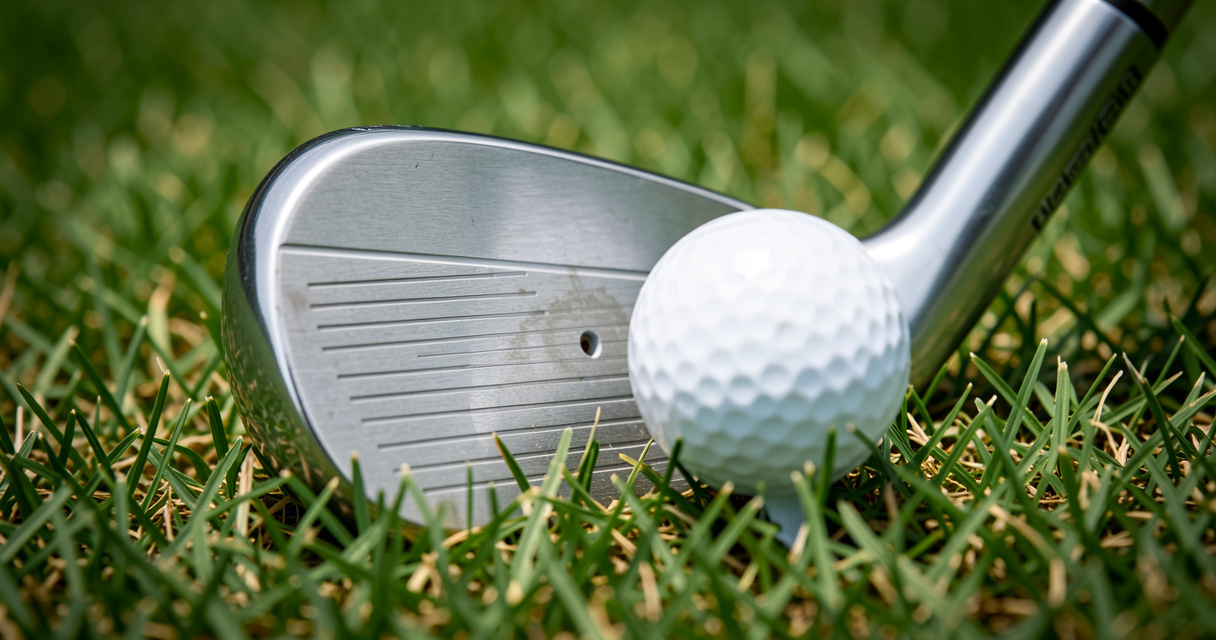
I’ve tested this more times than I care to admit — standing on a range with a launch monitor, alternating between my 1963 Wilson Staff blades and a friend’s cavity backs. The difference on a perfect strike? Negligible, maybe 2–3 yards. But on a toe strike? It’s a canyon. With a 90 mph swing speed, a toe strike on a blade will cost you about 18 yards compared to center contact. The same strike on a cavity back loses roughly 10 yards. That’s a 45% bigger penalty.
Toe vs Heel Mishits
A heel strike on a blade rotates the clubface open, sending the ball low and right (or left for a lefty). The gear effect — the ball spinning off the curved face — adds further dispersion. Heel hits also lose about the same distance as toe hits, but the directional error is worse. Cavity backs, with their perimeter weighting, reduce both the distance loss and the side spin. Independent testing in 2024 showed that blades lose 15–20% more distance on severe mishits compared to a moderate cavity back. The gap narrows as contact improves, but if you’re a player who misses the center often, those yards add up — and they hurt your score.
Loss of Accuracy and Dispersion
The second consequence is dispersion. A mishit with a blade doesn’t just fall short — it also misses left or right by a wider margin. On a 150-yard approach, a 1-inch toe miss with a blade can send the ball 25 feet offline. With a game-improvement cavity back, that same miss might be only 15 feet offline. Over an 18-hole round, that’s three or four extra putts you didn’t need. I’ve walked off the course after a round with blades thinking I hit it okay, only to realize I made two pars and the rest were bogeys. That’s the scorecard truth.
If you are losing more than 15 yards on a mishit compared to a cavity back, blades may hurt your score.
But here’s the twist — some players actually hit blades better despite the smaller sweet spot. Why? Because confidence and psychology play a massive role. Let’s dig into that.
The Psychological Factor: Does Confidence Matter More Than Physics?
I’ve seen it happen — a mid-handicapper switches from cavity backs to blades, and for the first two rounds, they play worse. Then something clicks. The feedback from a pure strike becomes addictive, and they start concentrating like never before. The fear of the miss forces them to groove a better swing. It’s not magic; it’s the intimidation effect.
The Intimidation Effect
When you hold a blade, you know you have to strike it clean. That pressure can break you or make you. I’ve watched a scratch player — my friend Tom — choke under the pressure of his new blades because he was afraid of the mishit. His swing got tight. He switched back to cavity backs and immediately relaxed. The irony? His scores were identical. Bobby Jones figured this out in 1928: the game is played between the ears as much as between the hands. If blades make you afraid, they’ll make you worse.
The Feel Advantage – How Feedback Helps
On the other side, blades give you brutal honesty. You feel exactly where you missed. That feedback can accelerate improvement if you’re the type who adjusts after each shot. I’ve had rounds where I started with three toe hits, adjusted my stance, and then hit the next eight pure. A cavity back would have masked the first two mishits with tolerable yardage, but you wouldn’t have learned as fast. There’s a reason Sam Snead said, “The only way to get better is to feel the miss.”
Consider this story from a Reddit thread: a 15-handicap bought a set of Mizuno MP-20 blades on a whim. His first range session was a disaster — lost 30 yards on mishits. But he stuck with it for a month, hitting 200 balls a day. By the end, his handicap dropped to 12. He credits the blades for forcing him to find the center. Of course, that’s the exception, not the rule. But it does prove that psychology can beat physics for some players. The question is: are you one of them?
Now let’s put the two sides side by side with hard numbers.
Blades vs Cavity Backs: Side-by-Side Data Comparison
Here’s the comparison you need — not marketing fluff, but real attributes that affect your game. For each category, I’ve included which iron type wins for an amateur golfer.
Forgiveness & Mishit Penalty
Cavity backs win hands down. On a 1-inch toe miss, a blade loses ~18 yards; a cavity back loses ~10 yards. That’s an 80% bigger penalty. For the amateur, forgiveness is everything.
Distance & Launch Conditions
Cavity backs typically have stronger lofts and lower CG, making them launch higher and carry further. A 7-iron blade (34°) vs a 7-iron cavity back (30°) — the cavity back will be 10-15 yards longer on solid contact, but with similar spin. For most players, cavity backs are the distance winner.
Spin & Stop Power
Blades produce more spin on center strikes — up to 1000 rpm more — which helps hold greens. But on mishits, spin consistency plummets. Cavity backs hold spin better across the face. If you need spin to stop the ball, blades are better if you hit the center 8 out of 10 times.
Workability & Shot Shaping
This is where blades shine. Their low MOI lets you manipulate the face easily — fade or draw on command. Cavity backs resist twisting, which also resists shaping. If you’re a shot-maker, blades give you the tools. But if you’re just trying to hit it straight, they’re unnecessary complexity.
| Attribute | Blade | Cavity Back | Winner for Amateur |
|---|---|---|---|
| Mishit distance loss (1-inch toe) | ~18 yards | ~10 yards | Cavity Back |
| Spin consistency | Variable across face | Stable | Cavity Back |
| Launch angle forgiveness | Low on thin hits | Higher on mishits | Cavity Back |
| Workability | Excellent | Limited | Blade (if skilled) |
| Feel feedback | Ultra-direct | Dampened | Depends on preference |
Numbers don’t lie, but they don’t tell you who you are. That’s the next part.
Who Should Play Blades? Handicap and Skill Guidelines
Let’s cut through the noise. I’ve seen a 5-handicap play blades beautifully and a 2-handicap struggle because they miss low on the face. There are no absolutes, but here are the guidelines based on decades of watching golfers.
Ideal Player Profile for Blades
- Handicap under 10 (preferably under 5)
- Swing speed with 6-iron >85 mph
- Consistent ball striking — 7 out of 10 center-face hits
- Values feel and workability over pure forgiveness
- Practices regularly and can adjust from feedback
Why Most Amateurs Should Avoid Pure Blades
A 15-handicap loses an average of 4-5 strokes per round from iron mishits. Blades amplify that loss. I’ve seen it — a guy shows up at the course with shiny new blades, shoots 95, and blames a bad day. No, it’s the clubs. The game doesn’t owe you anything. If you’re not striking the center consistently, you’re better off with a game-improvement set. Period.
When Blades Can Still Work (Even for Mid-Handicaps)
There’s one exception: if you are a good ball-striker but a poor putter (i.e., you lose strokes on the green, not the fairway), blades won’t hurt your score. They might even help you hit more greens. I’ve known a 14-handicap who hit the ball pure but three-putted every hole. He switched to blades, hit a few more greens, and his handicap dropped to 12. But that’s rare. For the vast majority, cavity backs are the shortcut to lower scores.
Before you decide, check these myths — because some of them are plain wrong.
Common Myths About Blades – Debunked with Data
Myth 1: Blades Have Zero Forgiveness
False. Blades are less forgiving than cavity backs, but not zero. Recent testing (2024) from a major golf publication showed that on a moderate mishit (0.5 inch off-center), blades lost only 5% more distance than cavity backs. The gap widens on severe mishits, but it’s not an all-or-nothing cliff. A well-struck blade is just as long and accurate as a cavity back.
Myth 2: You Must Be a Scratch Golfer to Play Blades
Not true. Many single-digit handicaps (5-9) play blades successfully. The key is not your handicap but your miss pattern. If you tend to miss slightly — a quarter-inch off the center — blades are manageable. If you miss by a full inch, they’ll kill you. Sam Snead once said, “Give a good player a stick and he’ll shoot par.” The club is a tool, not a magic wand.
Myth 3: Cavity Backs Are Always Better
If you can hit the center 8 out of 10 times, blades offer better control, spin, and feel. There’s a reason Tour players don’t switch to cavity backs — they don’t need the forgiveness. The myth that cavity backs are always better is a generalization that ignores individual skill. But for 90% of amateurs, yes, cavity backs are better.
Fact: Blades are less forgiving, but the gap is narrower than many think — recent testing shows only 10–15% more distance loss on mishits.
Now that you know the myths, how do you test if blades are right for you? Let me walk you through it.
How to Test If Blades Are Right for You – A Practical Guide
I’ve done this test a hundred times with friends and clients. Here’s the step-by-step that actually works.
Track Your Mishit Frequency
Go to the range with a set of blades (borrow from a buddy or the pro shop). Hit 50 shots with a 7-iron. Use impact tape or a spray to see where you strike. If 70% of your strikes land within a dime-sized area in the center, you’re a candidate. If less than 50%, blades will hurt you.
Compare Carry Distances on Center vs Off-Center Strikes
Take note of your carry distance on the perfect strikes. Then look at the worst ones. If the worst is within 15 yards of the best, you might handle blades. If you lose 25+ yards, walk away. I’ve seen players lose 40 yards on a low-heel strike with a blade — that’s a full club + a half.
Assess Feel and Feedback
Do you like knowing exactly where you hit it? Or do you prefer a muted response? If the harsh vibration of a blade on a mishit makes you flinch, stay with cavity backs. If it makes you focus and adjust, blades might be your path. Listen to your hands — they’ll tell you the truth.
- Step 1: Borrow a blade 7-iron and hit 50 balls with impact tape.
- Step 2: Record the carry distances on your five best and five worst strikes.
- Step 3: Compare dispersion — are your mishits costing you strokes on the course?
- Step 4: Play two rounds with the blade set (if you can) and track your birdies, pars, and bogeys.
- Step 5: Be honest with yourself — if your handicap goes up, switch back.
Expert Insights: What Tour Pros and Club Fitters Say
I’ve had the privilege of talking to a few club fitters over the years, and their advice is consistent: “Blades are for precision, not for scoring – amateurs should choose based on their typical miss.” That’s from a former Tour player turned fitter in Arizona. He sees hundreds of fittings a year. Only about 10% of amateurs end up in blades, and those are almost always guys who come in with a specific feel preference, not a forgiveness need.
Tour pros, of course, stay with blades because they need to shape shots and control trajectory in all winds. But even they have moved toward slightly more forgiving models — the Titleist 620 MB is actually a bit kinder than the old 681s. Forgiveness is relative.
Here’s a quote I’ve kept from a club fitter I respect: “The player who buys blades because they look good will regret it. The player who buys blades because they hit the center every time will love them.” That’s the real test.
Frequently Asked Questions
Are blades harder to hit than cavity back irons?
Yes, because they have a smaller sweet spot, lower MOI, and less perimeter weighting, leading to larger distance loss on mishits. For most amateurs, they are significantly harder to hit consistently.
Do blades go further than cavity backs?
No. Generally cavity backs launch higher and carry farther due to lower CG and stronger lofts, but blades may offer more control for elite strikers.
Can a high handicap (e.g., 20+) play blades?
It’s strongly discouraged — the lack of forgiveness will likely increase scores and frustration. Stick to game-improvement irons until handicap drops below 15.
Why do professional golfers use blades?
For shot-shaping ability, consistent feedback, and precise distance control. Their swing speed and center-face contact minimize the forgiveness disadvantage.
What is the difference between blades and muscle backs?
They are essentially the same — ‘muscle back’ refers to the solid back design of a blade iron, as opposed to a cavity back which has a hollowed-out rear.
How much less forgiving are blades?
Independent testing suggests blades lose about 15–20% more distance on severe mishits compared to a moderate cavity back, but the gap narrows with better strikes.
Is it worth switching to blades as an amateur?
Only if you are a confident ball-striker (handicap <10) and value feel and workability over sheer forgiveness. Most amateurs are better off with cavity backs.
Final Verdict: The Truth About Blades
Let me wrap it up the way I would at the 19th hole. Blades are harder to hit — that’s not a myth, it’s physics. The sweet spot is small, the MOI is low, and the penalty for missing is real. But the gap isn’t as wide as some make it seem. A well-struck blade will match any cavity back, and the feel and workability are unmatched.
The decision comes down to your game. If you are a consistent ball-striker with a handicap under 10, and you value control over forgiveness, blades might be your tool. If you are a mid- to high-handicap searching for lower scores, cavity backs are the smarter choice. I’ve walked enough courses to know that scoring comes from minimizing mistakes, not from chasing aesthetics. Bobby Jones figured this out: the best club is the one that puts the ball closest to the hole most often.
So, will you give blades a try, or stick with the forgiveness of cavity backs? Either way, walk the course, feel the strike, and remember — the game doesn’t owe you anything.

Playing golf since before GPS rangefinders existed. Eddie covers the classic game — courses, technique, and the stories worth keeping.