

Reading time: 18 minutes
Key Takeaways
- Save 40–60% on used left-handed iron sets compared to new retail — lefty gear depreciates faster, creating real bargains.
- Condition is everything. Inspect grooves, shaft straightness, and grip wear before buying. A $300 set in Very Good condition beats a $500 set in Good condition.
- Match shaft flex to your swing. Swing speed determines flex (R, S, X). A wrong flex costs you more distance than any club head technology.
- Buy from trusted sellers with clear return policies. Left-handed inventory is limited — verify serial numbers to avoid counterfeits.
Why Buy Used Left‑Handed Golf Iron Sets?
Here’s the thing nobody talks about: nearly 25% of used golf club searches return no left‑handed options at all. Yet the players who know where to look routinely save over $500 on a premium set. Left‑handed golfers face a frustrating reality of limited selection, inconsistent condition grading, and pricing that often feels like a guessing game. This guide cuts through that noise so you can buy used left‑handed golf iron sets with confidence.
The Depreciation Advantage for Lefties
According to Golf Datatech’s 2024 equipment market report, left‑handed clubs account for less than 10% of all new sales. Lower demand means faster depreciation. A set of right‑handed Callaway Apex might hold 60% of retail after two years, but the left‑handed version drops to 45–50%. That’s your gain. You can pick up a nearly new set for half the price.
Performance vs. Budget – The Sweet Spot
The game doesn’t owe you anything, but it does offer a deal if you’re smart. New iron sets for lefties average $1,200 for game‑improvement models. A used set in Very Good condition runs $400–$700. That’s 40–60% off. You’re not sacrificing technology — you’re buying last year’s same head design with a few bag chatter marks. Bobby Jones figured out in 1928 that a club is about the swing, not the polish.
| Set Model | New MSRP | Used Avg Price |
|---|---|---|
| Callaway Apex 21 | $1,299 | $499–$599 |
| TaylorMade P790 | $1,399 | $549–$649 |
| Ping G430 | $1,199 | $449–$549 |
Now, before you jump at the first listing, you need to know exactly what you’re looking at. I’ve seen too many lefty golfers snag a “great deal” only to find worn grooves and a bent shaft. That brings us to the single most important skill: inspection.
How to Inspect a Used Left‑Handed Iron Set
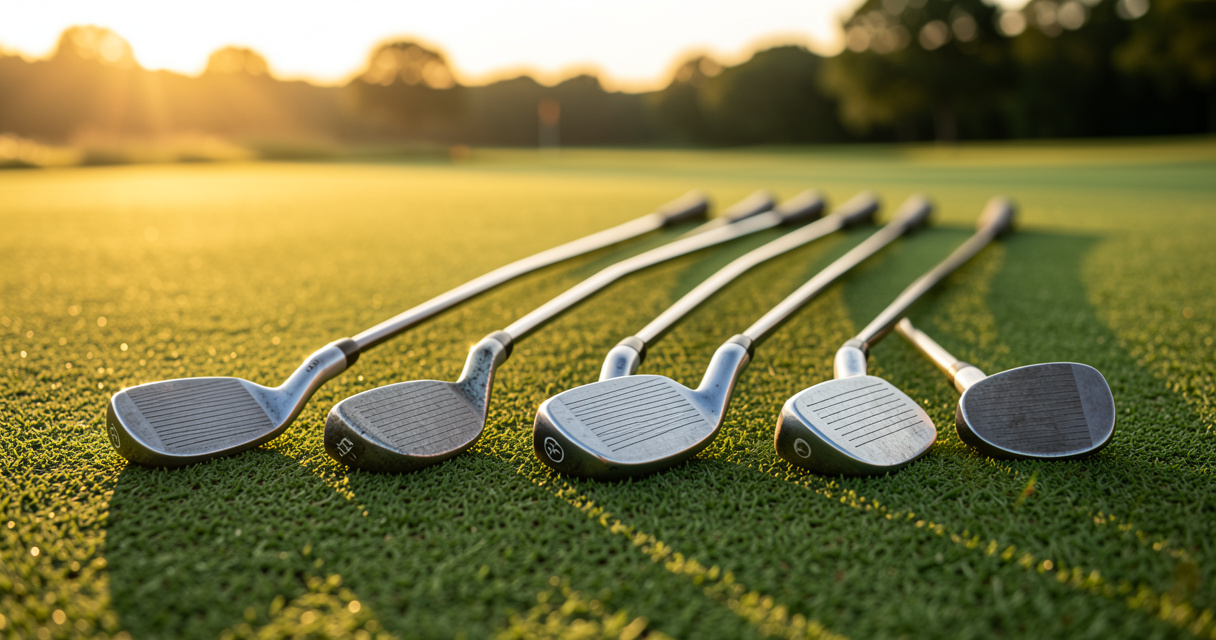
When inspecting a used left‑handed iron set, follow this checklist:
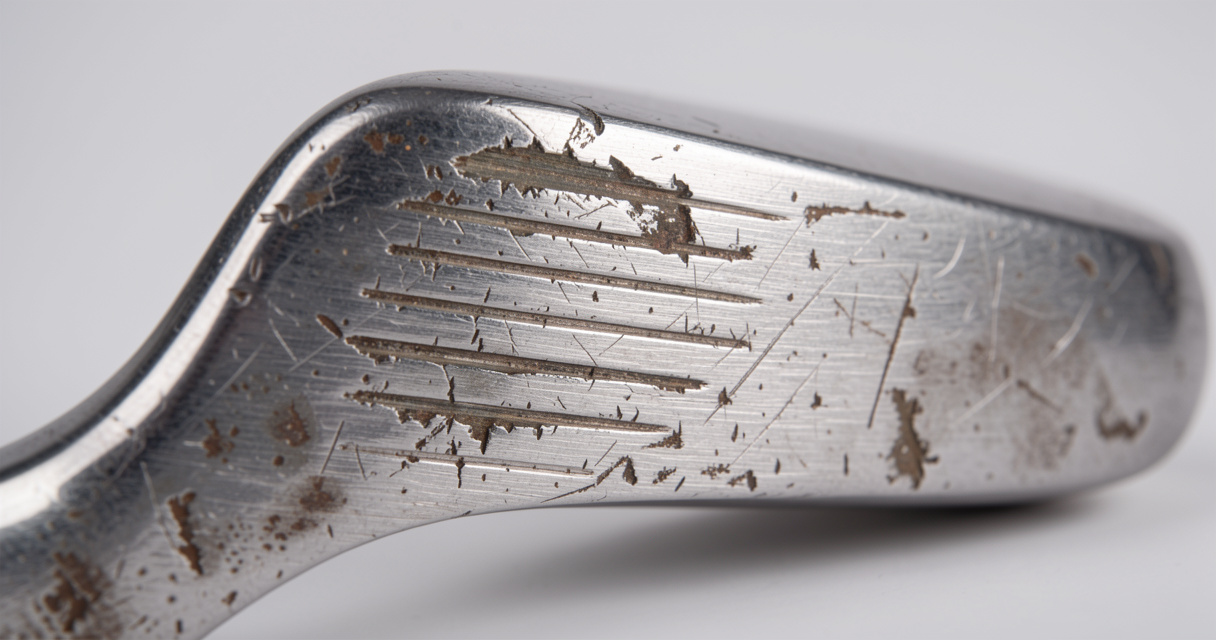
- Groove depth — run a fingernail across the face; sharp edges mean decent life left. Shallow grooves mean poor spin.
- Face condition — no deep scratches or pitting. A few ball marks are fine.
- Sole scuffs — light wear is normal; deep gouges indicate heavy play on hard turf.
- Shaft straightness — roll the club on a flat surface; wobble equals a bent shaft.
- Grip condition — look for cracks, slick spots, or worn logos. Re‑gripping costs $10–15 per club.
- Loft and lie — verify they match factory specs using a lie board or ask the seller. Off‑spec can cause pulls or pushes.
- Ferrule — check for cracks at the hosel. A cracked ferrule can lead to head loosening.
- Serial number — locate on the hosel and verify with the brand if possible. Counterfeits often skip serials.
I once bought a set of left‑handed Mizuno MP‑20s online that looked pristine in the photos. First round, the 6‑iron ferrule cracked on a mis‑hit. The seller offered no refund, and I paid $40 to have it repaired. The lesson? Always ask for a condition guarantee. Left‑handed sets often sit longer in inventory, so what looks “very good” on a scale might actually be “good” after real use.
Checking the Grooves and Face
Grooves are the engine of your iron. If they’re worn down, you might as well be hitting a butter knife. I’ve played that shot a thousand times — a clean groove digests the grass and grabs the ball. Run a fingernail perpendicular across the grooves. If it catches, they’re fresh. If it slides, you’ll lose spin by 1,000–2,000 RPM. That’s the difference between holding a green and rolling off the back.
Inspecting Shafts and Hosels
Bent shafts happen more often than you’d think — especially in used left‑handed sets that may have been shipped carelessly. Lay the club on a flat countertop and spin it. Any wobble means the shaft is bent. That’s a hard pass. Also check the hosel for any gap or movement. A loose head is a safety hazard.
Grip Condition and Replacement Cost
Grips wear out faster than any other component. If the set has stock grips that are slick or cracked, budget $80–120 for a full re‑grip. That’s not a deal‑breaker, but it should be factored into your offer. I always negotiate $50 off if the grips are shot.
| Condition Grade | Grooves | Face | Shaft | Grips |
|---|---|---|---|---|
| Excellent | Sharp, deep | Minimal marks | Straight | Like new |
| Very Good | Some wear | Light scratches | Straight | Good |
| Good | Visible wear | Scratches | Straight | Worn but usable |
| Poor | Shallow | Deep marks | Bent | Need replacement |
Now that you can separate a gem from a lemon, it’s time to talk brands. Not all left‑handed irons are created equal, and some models are far rarer than others.
Top Brands and Models for Left‑Handed Golfers
Good left‑handed iron sets come from the same big names, but availability varies wildly. The best left handed irons for mid handicap players tend to be cavity‑back designs with some forgiveness, but there’s a place for muscle backs if you’re a purist. Let’s break down what you’ll actually find in the used market.
Game‑Improvement Series (Callaway, Ping)
Callaway’s Big Bertha and Apex lines are abundant in left‑handed. The Apex 21 has a forged face in a cavity back – great feel and forgiveness. Ping G425 and G430 are also widely available and known for durability. Expect to pay $400–$600 for a set in Very Good condition. These are your best bet if you want something that will last 5–7 years of regular play.
Players Irons (Mizuno, Titleist)
Mizuno JPX 921 Forged are my personal favorite – buttery soft and surprisingly forgiving. Titleist T‑series (T100, T200) are harder to find in left hand, but they exist. If you see a left‑handed set of T100, grab it. They hold value and feel like a bent putter. Just know that the left‑handed inventory for Titleist players irons is maybe 5% of what’s out there for righties.
Budget‑Friendly Options (Cobra, Wilson)
Cobra King Speedzone or Wilson Staff D9 can be found for under $300. They’re solid game‑improvement clubs with perimeter weighting. Wilson’s Dynapower line also offers good value, though the used market is thinner. Don’t expect premium feel, but they’ll get you around the course without breaking the bank.
| Brand/Model | Best For | Typical Used Price Range |
|---|---|---|
| Callaway Apex 21 | Mid‑handicap, feel + forgiveness | $450–$600 |
| TaylorMade P790 | Low‑mid handicap, speed foam | $500–$700 |
| Ping G430 | High handicap, max forgiveness | $400–$550 |
| Mizuno JPX 923 Hot Metal | Mid handicap, distance + feel | $400–$600 |
| Cobra King Speedzone | Budget, game‑improvement | $200–$350 |
Pricing varies, so let’s look at the dollars and cents more closely. Whether you’re hunting for a bargain or a premium set, you need to know the market.
Price Ranges for Used Left‑Handed Iron Sets
Beware of counterfeit sets — always buy from verified sellers or get a serial number check. With that warning out of the way, here’s how the used market breaks down by price tier.
Budget Tier: Under $200
You’ll find older models like the Ping Eye2, TaylorMade R7, or Callaway X‑18. These are cast irons with decent grooves if they haven’t been overused. Perfect for a beginner or a weekend player. But be prepared for worn grips and possible shaft rust. Expect a set of 5‑PW, good condition, for $150–$200.
Mid‑Range: $200–$400
This is the sweet spot for most left‑handed golfers. You get modern clubs like the Callaway Mavrik, Ping G400, or TaylorMade M6. These were top sellers a few years ago and still perform. Condition is typically Very Good. You’ll save over $500 from new while getting 90% of the performance.
Premium: $400–$700
Tour‑quality irons like the Mizuno MP‑20, Titleist T100, or Callaway Apex Pro. These hold their value longer, but you’re getting forged construction and precision. Often these sets have less wear because they were owned by better players who take care of gear. If you’re a low‑handicap lefty, this is where you shop.
Now, you might be wondering: fit matters just as much as price. The best set in the world won’t help if the shaft is wrong for your swing. Let’s get into the technical side.
Shaft Flex and Swing Weight for Left‑Handed Players
The second‑hand market can be a mixed bag when it comes to shafts. Many left‑handed iron sets are bought by beginners and then traded in with a regular flex — but that may not be right for you. Here’s the truth: shaft flex is the single biggest performance differentiator after clubfit. I’ve seen a mid‑handicap player lose 10 yards just because they were swinging a stiff shaft when they needed regular.
Understanding Flex Ratings
Common flexes are Ladies (L), Senior (A), Regular (R), Stiff (S), and Extra Stiff (X). If you swing a 6‑iron at 75–85 mph, Regular is your zone. 85–95 mph, Stiff. Above that, X. But don’t guess — get your swing speed measured. A pro can do it in five minutes.
| Swing Speed (6‑iron, mph) | Recommended Flex |
|---|---|
| Under 65 | L (Ladies) |
| 65–75 | A (Senior) |
| 75–85 | R (Regular) |
| 85–95 | S (Stiff) |
| Over 95 | X (Extra Stiff) |
Swing Weight and Balance for Left‑Handed Clubs
Swing weight (e.g., D2, D3) affects how the club feels during the swing. Most standard irons come around D2. If you’re sensitive to balance, you can adjust by adding lead tape or changing grip weight. But for a used set, I recommend playing it as‑is unless it feels noticeably off. A club that’s too light will feel whippy; too heavy, you’ll be fighting it. Walk the course for a few rounds before deciding.
Now that you know what to look for, the next challenge is actually finding the clubs. Let’s talk about where to buy – and where not to.
Where to Buy Used Left‑Handed Iron Sets Safely
I’ve bought left‑handed irons from a dozen places, and I’ve been burned twice. Here’s a safe buying checklist:
- Check the return policy – minimum 14 days, no restocking fee.
- Read recent reviews of the seller, especially regarding left‑handed sets.
- Ask for detailed photos of each iron – face, sole, back.
- Verify serial number if possible (Callaway, Ping, Titleist have online checkers).
- Avoid final‑sale listings, no matter how great the price.
Online Retailers with Left‑Handed Inventory
GlobalGolf, 2nd Swing, and Callaway Golf Pre‑Owned all have left‑handed filters and condition grading. RockBottomGolf also carries used left‑handed sets, but inventory is smaller. eBay is a mixed bag – use it only if the seller has a rating above 98% and offers returns. I’ve had good luck with Golf Avenue (Canada) for premium brands.
Local Pro Shops and Trade‑Ins
Don’t overlook your local golf shop. They often have a used rack, and you can actually put hands on the club. Plus, many offer a 30‑day playability guarantee. The downside is that left‑handed inventory is usually just a couple sets, so you may need to check back often.
Avoiding Scams and Counterfeits
Counterfeit left‑handed irons are rare but they exist. I once saw a fake set of Ping G425 that had a poorly stamped serial. Compare to official photos on the brand site. If the price is too good to be true – say a $1,200 set for $200 – it probably is. Always trust your gut and buy from a reputable source.
Once you’ve found the right set, you might be looking to offload your old clubs. Here’s how to do that without getting ripped off.
Selling or Trading Your Old Left‑Handed Irons
Left‑handed clubs have a smaller buyer pool, so you need to price competitively if you want to sell quickly. Trade‑in offers from online retailers like GlobalGolf typically give you 30–50% of the resale value – less than selling directly, but fast and hassle‑free.
Online vs. Local Selling
eBay and Facebook Marketplace are the best options for direct selling. Take clear photos in natural light, list the condition honestly, and include the shaft flex and grip size. I usually price 10% above what I expect to get, then negotiate down. Left‑handed sets sell slower, so be patient. A listing might take 2–3 weeks instead of days.
Maximizing Resale Value
Clean the clubs, re‑grip if the grips are worn, and include the original tool if you have it. A set that looks cared for can fetch 15–20% more. And always ship with insurance – I learned that the hard way.
Now let’s save you from the traps I’ve fallen into. Here are the most common mistakes left‑handed golfers make – and how to avoid them.
Common Mistakes Left‑Handed Golfers Make When Buying Used Irons
Over the years, I’ve made every one of these errors. Learn from them so you don’t waste your time or money.
Mistake 1: Neglecting Lie Angle
Lie angle is critical for left‑handed players because our swing plane can be more upright or flatter than standard. If your used set is 2 degrees upright and you need standard, you’ll be pulling everything left. A pro can adjust lie angles for about $5 per club, but factor that into your total cost.
Mistake 2: Overlooking Grip Size
Many left‑handed sets come with standard grips, but if you have larger hands or wear a glove size XL, a standard grip will cause you to over‑squeeze. Check the diameter at the butt end. You can always add tape layers, but it’s easier to start with the right size.
Mistake 3: Buying Incomplete Sets
A 5‑PW set is the standard. But if you buy a 4‑PW, make sure you actually need a 4‑iron. Many mid‑handicappers are better off with a hybrid in that slot. Avoid sets that skip odd or even irons – you’ll create yardage gaps.
Never buy used irons without a condition guarantee – many listings are final sale. Always ask.
I remember a guy named Tom who bought a left‑handed set of TaylorMade P790s from a private seller at a discount. He assumed the lie angle was standard – it turned out to be 2 degrees flat. He spent a whole season pushing shots right before a fitter caught it. Without trying them first, you’re rolling dice.
FAQ – Used Left‑Handed Iron Sets
Are left‑handed iron sets harder to find than right‑handed?
Yes, left‑handed sets represent roughly 10% of used inventory, but online retailers often stock a curated selection. Searching specifically for left‑handed filters helps.
How much can I save buying used left‑handed irons?
Typically 40–60% off new retail. Left‑handed clubs depreciate slightly faster due to lower demand, offering better value for budget‑conscious buyers.
What condition grade should I look for in used irons?
Very Good or Excellent ensures minimal wear. Avoid clubs with deep face scratches, worn grooves, or rust. Good is acceptable for beginners but budget for regripping.
Can I get fitted for used left‑handed irons?
Yes, many fitters offer used club inventory. Alternatively, buy used and have a pro adjust the lie angle and shaft length to match your specs.
What is the most forgiving left‑handed iron set for a high handicap?
Game‑improvement irons like Callaway Big Bertha or Ping G425 are popular for forgiveness. Look for cavity backs with wide soles and perimeter weighting.
How long do used left‑handed irons typically last?
With proper care, a set can last 5–10 years. Groove wear is the main factor – once grooves become shallow, spin and control decrease.
Should I buy a full set or a partial set of used irons?
Full sets (4‑9, PW) are more common, but partial sets can be cheaper. Ensure you can fill gaps with a hybrid or wedge if buying a partial set.
Final Thoughts – Trust the Process, Then Trust the Club
The game doesn’t owe you a bargain – you have to find it. But if you inspect the condition thoroughly, match the shaft flex to your swing speed, shop from trusted sellers, and set a budget based on the price tiers I’ve laid out, you’ll walk away with a set of pre‑owned left‑handed iron sets that perform like new.
Bobby Jones once said that a golf club is an instrument, not a trophy. The best instrument is the one that fits you. And now that you know exactly what to look for – which set will you choose to upgrade your game?

Playing golf since before GPS rangefinders existed. Eddie covers the classic game — courses, technique, and the stories worth keeping.