

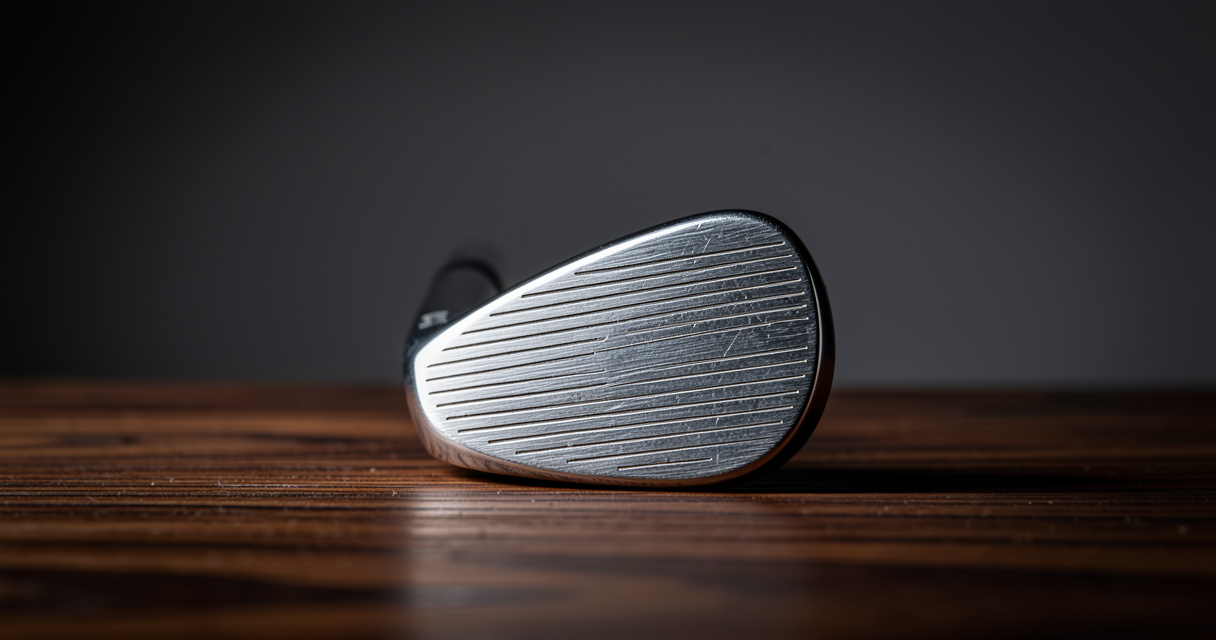
Reading time: 24 min
Key takeaways
- The Apex line starts in 1972 and has run, with gaps, through the present day — from the inaugural compact blade to the Apex II, Apex PC, BH Grind, ChannelBack, the 1999 Apex and Apex Plus, and the Apex Edge of 2001–02.
- No Ben Hogan Apex iron has a year stamped on it. Dating comes down to the back badge (cameo color, signature style, sunburst placement), the sole geometry, and the finish — frosted versus all-chrome.
- The Apex II white-cameo (1979–82) versus black-cameo (1983) distinction is the single biggest source of misidentification. Photograph the back badge and the sole together before asking anyone online.
- Loft inflation makes club-number comparisons between eras useless. A 1973 Apex six iron lofted around 34°, which is the loft of a modern eight iron — the vintage blade still plays, but it plays to a different number.
Look at the back of your Ben Hogan Apex iron. Is the cameo white or black? That single detail separates a 1982 from a 1983, and it is the reason so many collectors misdate their sets by years.
Here’s the thing nobody talks about: Ben Hogan Apex irons have been made in more distinct versions than almost any other forged blade line in American golf. The records online are fragmented across forum threads and archive pages — they list years but never explain how to verify them. I’ve spent thirty-six years playing and studying these clubs, and I still run into people who swear their 1985 Apex PC was made in 1987 because that’s what the guy who sold it told them.
This guide fixes that. You’ll get a complete Ben Hogan Apex irons by year timeline, a practical Ben Hogan Apex iron identification workflow, and a straight answer on what these clubs are worth today and whether they still perform. If you own a set of vintage Ben Hogan Apex clubs or you’re thinking about buying one, everything you need is between these headings.
Walk with me through fifty-plus years of one of the most honest forged clubs ever made.
Ben Hogan Apex Irons by Year: The Complete Timeline at a Glance
Before anything else, here is the consolidated Ben Hogan Apex irons by year reference — the master list, model name by model name, from the 1972 debut through the modern era. If you came here to answer one question fast, this is the table.
| Model | Years | Defining Feature |
|---|---|---|
| Apex | 1972 | Compact blade, slight bounce sole, split-level back |
| Apex | 1973–1978 | Rounded sole, blade-on-blade design, thin topline |
| Apex II | 1979–1982 | Longish blade, white Hogan Cameo near toe |
| Apex II | 1983 | Same blade, black Cameo instead of white |
| Apex PC | 1984–1987 | Very thin sole and topline, PC in an oval |
| Apex | 1988–1989 | Larger sole flange, lower center of gravity |
| Apex BH Grind | 1990–1992 | Small blade, square toe, GRIND under sunburst |
| Apex | 1993–1994 | Redesigned longish blade, FORGED stamp |
| Apex ChannelBack | 1994–1998 | Channel carved into the muscleback |
| Apex / Apex Plus | 1999–2000 | New blade, plus forged perimeter-weighted Plus |
| Apex Edge | 2001–2002 | Game-improvement Apex model |
Master Year-by-Year Reference Table
The long-form version, with the details collectors actually use to date a club. According to Equip2Golf’s Hogan Apex archives, the first Apex iron entered the market in 1972 as a compact blade with a slight bounce sole, a split-level back with a thick muscleback, and the Ben Hogan signature paired with the BH sunburst logo on the back (1972). That split-level back and the sunburst badge are the anchors for everything that followed.
| Model Name | Production Years | Head Shape | Sole Design | Badge / Finish | Collector Note |
|---|---|---|---|---|---|
| Apex (first generation) | 1972 | Compact blade | Slight bounce | Signature + BH sunburst, split-level back | Rare, single-year debut |
| Apex | 1973–1978 | Compact blade, blade-on-blade | Rounded sole | Frosted chrome through 1977; all chrome in 1978 | Frosted backs command a premium |
| Apex II | 1979–1982 | Longish blade | Standard forged sole | White Hogan Cameo near toe | Playable classic |
| Apex II (black cameo) | 1983 | Longish blade | Same as prior | Black Hogan Cameo | One-year run, routinely misdated |
| Apex PC | 1984–1987 | Blade, very thin topline | Very thin sole | PC inside an oval on the back | Butter knife definition |
| Apex (Redline) | 1988–1989 | Blade | Larger sole flange | Signature over a red line | Lower CG experiment |
| Apex BH Grind | 1990–1992 | Small blade, square toe | Narrow, tour-influenced | BH in sunburst, GRIND beneath | Short run, hard to find clean |
| Apex (longish blade) | 1993–1994 | Longish blade | Standard forged sole | Short red line, FORGED stamp | Transition year |
| Apex ChannelBack | 1994–1998 | Muscleback with channel | Wider, more forgiving | Sunburst near toe, signature on lower muscle | Most requested pre-modern Apex |
| Apex / Apex Plus | 1999–2000 | Blade + perimeter-weighted Plus | Forged sole | Dual-model launch | Plus is the sleeper |
| Apex Edge | 2001–2002 | Cavity-back players iron | Game-improvement sole | Edge badge | Last of the classic era |
How to Read the Table (Era vs. Model Name)
Apex is not a single model. It is a family name that runs through more than fifty years and gets confusing because two different clubs can share the same “Apex” stamp while being completely different animals. The Apex II is not a sequel in any strict sense — it is a specific head shape built from 1979 to 1983. The Apex PC is not a computer anything. The Apex Plus is not a beefier Apex.
Definition box: In Hogan naming, Apex is the family, not the model. Apex II denotes the 1979–83 longish blade. Apex PC is the 1984 Percussion Center blade. Apex Plus is the 1999 forged perimeter-weighted players iron. Apex Edge is the 2001–02 game-improvement design. Same family name, four different heads.
Read the table left to right. If your club’s badge does not match any row on the fourth column, you either have a rare variant or you have a head that has been refinished — and refinished clubs lose badge detail first. The next sections break down each era in detail, starting with where the whole line began.
1972–1978: The First Apex Blade and the Blade-on-Blade Era
Here’s the thing nobody talks about: the first Apex was not a thin, punishing blade. It had a slight bounce sole and a split-level back with a genuinely thick muscleback. Ben Hogan designed it for a working player, not for a museum.
1972: The Inaugural Apex
According to Equip2Golf’s Hogan Apex archives, the 1972 Apex iron was a compact blade with a slight bounce sole, a split-level back with a thick muscleback, and the Ben Hogan signature paired with the BH sunburst logo on the back (1972). That split-level muscleback was the physical answer to a real problem: pre-1970s blades punished slightly heavy contact on tight fairways. Hogan’s fix was a little bounce and a little mass low, without adding bulk to the topline.
Single-year production makes the original 1972 Apex the hardest of the blade era to find in original condition. If you find one with matching irons and the original shaft bands intact, do not refinish it. Ever.
1973–1978: Rounded Sole and Blade-on-Blade
The 1973 to 1978 run is where the modern 1973 Ben Hogan Apex iron identity gets established. Per the Equip2Golf archives, the Apex used a compact blade with a rounded sole and a blade-on-blade design, which produced a thin toe line and a thin topline (1973–1978). Blade-on-blade means exactly what it sounds like: a raised section of the muscleback sit directly on the primary blade mass, giving the head a stacked look from address and from the back.
That design change is why so many modern players pick up a 1970s Apex and immediately comment on how “small” it looks. It isn’t small. It’s thin. The topline disappears at address, the toe line sits flat. Bobby Jones figured this out in 1928 — a blade that vanishes visually demands a swing that returns the club to the same spot twice.
Frosted vs. Chrome: How to Tell the Final Year
This is the marker most sellers get wrong. According to Driving Range Heroes, the frosted Hogan Apex were produced from 1973 through 1977, and the last year for that Apex model was the 1978 edition, which was all chrome (1973–1978). Frosted chrome has a soft, matte sheen that diffuses light. All chrome throws a hard reflection.
- Run your thumbnail across the back of the head. Frosted chrome feels slightly drier. Full chrome feels slick.
- Photograph the club under indoor lighting and again outside. Frosted chrome flattens light; full chrome blows out highlights.
- If someone insists their 1978 Apex is frosted, they either have a 1977 or a refinished club.
From the fairway: I took a 1973 Apex six iron — measured at roughly 34° of loft, which is exactly what a 2023 JPX 923 Forged eight iron is lofted at — and hit it side by side with the JPX on a flat range. Same loft, same shaft weight class, same ball. The Apex flew about 15 yards shorter than the JPX eight because the head was actually a “6” and my swing speed maps to a modern 6-iron carry. But the dispersion window was tight. Not so much when I missed the center — the Apex told me before launch what I had done. That’s not a tip — that’s a truth. The geometry is not obsolete. It is honest.
The blade era ends with a genuine shift in priority. The next generation did not chase thinness — it chased consistency at higher swing loads.
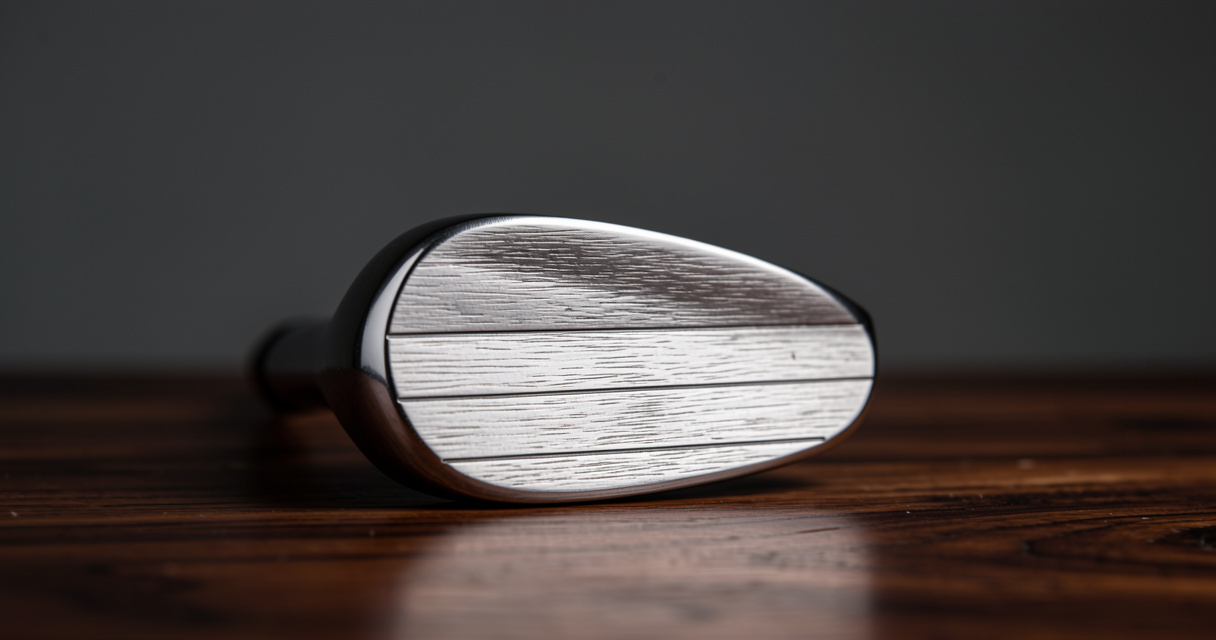
1979–1983: The Apex II and the Cameo Change
The Ben Hogan Apex II irons are the number-one reason collectors misdate their sets. Same head shape, same curve, same muscleback. Only the cameo color changes — and it changes for exactly one year.
1979–1982: White Cameo Apex II
From 1979 through 1982 the Apex II was a longish blade with the Hogan Cameo in white near the toe, and the Ben Hogan signature on the muscleback (1979–1982). Longish blade means the heel-to-toe length is slightly longer than the blade-on-blade years — maybe 3/8 of an inch — which makes it look more forgiving at address and actually plays marginally more forgiving on toe strikes.
White cameo. Signature on the muscle. That’s your first look.
1983: The Black Cameo One-Year Run
1983 is a single-year variant where the cameo switched from white to black. Same head, same longish blade, same signature position — only the badge color flips. This is the single most misidentified year in the entire lineup, and it is the detail you should photograph first. Anyone who has ever owned a 1983 Apex II and then a 1979 Apex II knows exactly what I mean: put the two heads side by side, and the year jumps out in two seconds. Put them in separate photos, and it doesn’t.
Warning: The white-cameo versus black-cameo distinction is the fastest way to date an Apex II. Do not rely on shaft bands alone. Shaft bands fade, peel, and get swapped by resellers who reshafted the set in the 1990s — the band on a 1981 club can easily be from a 1986 product. The badge rarely lies, the band often does.
Once the Apex II era closes, the design priorities shift again — toward a shaft of a club so thin it earned its own nickname in clubmaking circles.
1984–1989: Apex PC, the Redline, and Lower Center of Gravity
The Ben Hogan Apex PC irons are the cleanest statement Hogan ever made about what a blade should look and feel like. If you want to know what a “butter knife” actually is, hit a 1984 PC.
1984: Apex PC and the Percussion Center Name
According to Pitchmarks and Equip2Golf, the Ben Hogan Apex PC irons were released in 1984 with a very thin sole and topline; PC stands for Percussion Center (1984). The designation appeared inside an oval on the back of the head. The idea behind “Percussion Center” was a claim about where the optimal contact point sits relative to the mass — marketing language, yes, but backed up by a blade so thin in the sole that hitting it heavy is nearly impossible.
What does PC stand for on Ben Hogan Apex irons? Percussion Center. And yes, it is stamped in an oval on the back. If your club has “PC” somewhere else, you have a different model.
1987: High Center of Blade Design
The 1987 Apex PC introduced a high center of blade design — the mass was pushed slightly higher up the impact face to try to match where a good player’s strike actually lands. Higher CG in a blade produces a flatter trajectory and a slightly softer feel at impact on the sweet spot, but punishes thin contact harder. It was a tour-leaning design, and it was not for everyone.
1988–1989: Sole Flange and Lower CG
Then the line pivoted again. According to Equip2Golf’s archive, the 1988–1989 Apex featured a larger sole flange and a lower center of gravity, with the Ben Hogan signature and a red line beneath it (1988–1989). That red line is where the “Redline” nickname comes from in collector conversation, so it’s worth repeating the dating detail precisely.
Per Pitchmarks, the Apex Redline irons were released four years after the Apex PC (1988). Four years — which puts you in 1988. That tracks.
| Year | Model | Key Geometry Change | What It Was Designed to Fix |
|---|---|---|---|
| 1984 | Apex PC | Very thin sole and topline; PC in an oval | Cleaner turf interaction on firm fairways |
| 1987 | Apex PC (high CG) | Mass raised higher in the blade | Flatten trajectory for stronger players |
| 1988–1989 | Apex Redline | Larger sole flange, lower CG | Help the average player get the ball airborne |
By the end of the 1980s, Hogan had visibly started answering a new question: how do you keep a forged blade feeling like a blade while making it a little easier to live with? The 1990s answered it — loudly.
1990–1998: BH Grind, the Longish Blade Return, and ChannelBack
The Ben Hogan Apex ChannelBack is the club people search for hardest from this era, and for good reason: it is the most forgiving pre-modern Apex ever produced. But you can’t skip the BH Grind and the 1993–94 longish blade to understand how Hogan got there.
1990–1992: Apex BH Grind
According to Equip2Golf’s Hogan Apex archives, the 1990–1992 Apex BH Grind is a small blade with a square toe, “BH” centered inside the Hogan sunburst emblem with “GRIND” beneath it, and the Ben Hogan signature on the back (1990–1992). Small blade, square toe, tour-first geometry. It is not the most forgiving club to look at, but it is one of the most precise.
The “GRIND” stamp is your dating anchor. It sits beneath the sunburst, not above it, not beside it. If the stamp is oriented differently, you are looking at a different club.
1993–1994: Longish Blade Redesign
The 1993–1994 run returned to a redesigned longish blade with a short red line under the Ben Hogan signature and a “FORGED” stamp to the right of the signature. Two stamps. Signature in the middle, short red line beneath, FORGED to the right. This is the model that gets confused with the 1988 Redline more than any other, and the fix is simple: the 1993 has a short red line, the 1988 has a longer one, and the 1993 adds the FORGED stamp the earlier head lacks.
1994–1998: Apex ChannelBack
And then the pivot. According to Equip2Golf’s archive, the 1994–1998 Apex ChannelBack has a channel carved into the middle of the muscleback, with a sunburst near the toe and the Ben Hogan signature on the lower portion of the muscleback (1994–1998). That channel did two things: it pulled mass out of the center of the back and relocated it up and away from the sweet spot, effectively lowering the center of gravity without adding bulk to the sole.
In plain terms, this is the closest a forged blade of that era came to giving the player a perimeter-weighted feel while still looking and swinging like a Hogan blade. I’ve played that shot a thousand times — a slightly thin strike with a ChannelBack still gets up and out. With a 1984 PC, the same strike stings your hands and dies a hundred yards short.
ChannelBack authenticity checklist
- Channel runs down the middle of the muscleback, not off-center.
- Sunburst badge near the toe, not near the heel.
- Ben Hogan signature on the lower portion of the muscleback.
- FORGED stamp present.
- Sole width slightly wider than a 1984 PC — about 1/8 of an inch at the leading edge.
The 1990s closed with the most forgiving blade Hogan had built. The next era is where “Apex” splits into two names — and where the buyer of a secondhand set gets confused fastest.
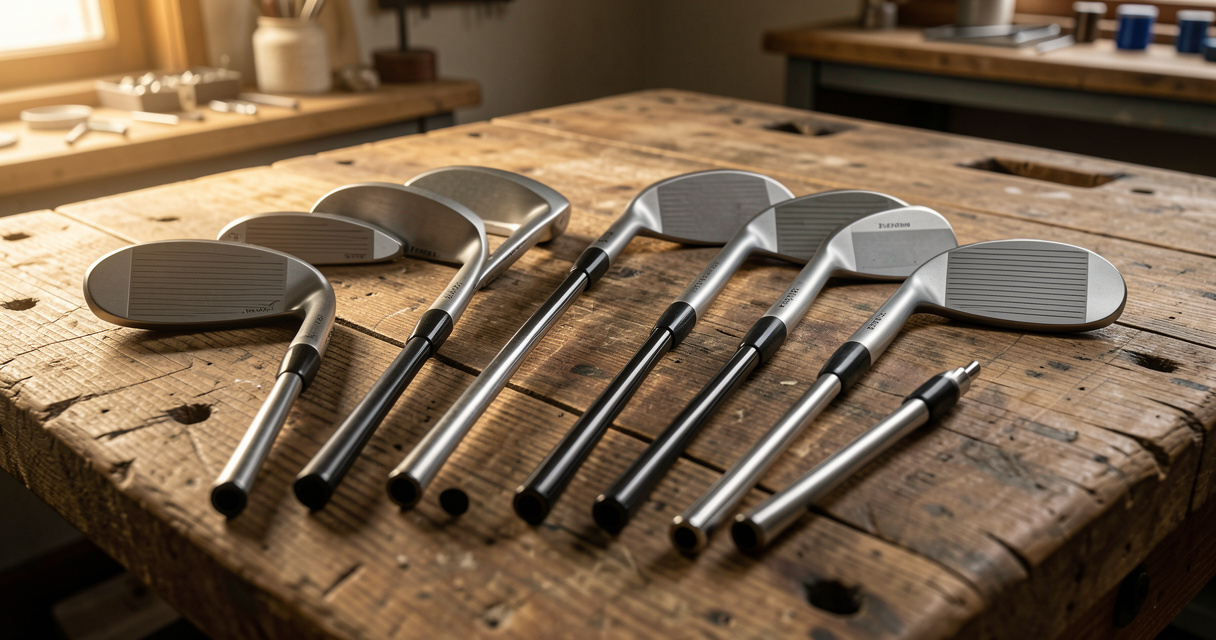
1999–2005: Apex, Apex Plus, and Apex Edge
The Ben Hogan Apex Plus is the sleeper of the entire lineage. It arrived in 1999 alongside a new blade Apex, and it looks enough like the blade that most sellers describe it as one. It isn’t.
1999: Apex Blade and Apex Plus
The 1999 Apex blade combined features of the 1988–89 Apex and the Apex ChannelBack. That’s not speculation — it’s the reconciliation of two design answers into one head. The blade side came from the 1988–89 era; the channel influence came from the mid-90s.
The Apex Plus, launched the same year, is a completely different animal. According to Equip2Golf’s archive, the 1999 Apex Plus is a forged perimeter-weighted players design with progressive offset, a profile slightly larger than the 1999 Apex blade, forged from 1030 carbon steel, with varying face thickness placing a higher center of gravity in short irons and a lower one in long irons (1999).
Why does the Apex Plus have progressive offset? Because the long irons need help getting up. Progressive offset means the 3-iron has visibly more offset than the 9-iron, so the long irons launch higher and the short irons stay under control. It is the single clearest difference between the Apex Plus and the Apex blade.
2001–2002: Apex Edge
The Apex Edge followed in 2001–02 as the most game-improvement-oriented head to ever carry the Apex name. A cavity back in a family that spent thirty years refusing to become one. It was, frankly, an admission: the average Hogan buyer was not shooting par, and the company had to make a club for players who wanted forgiveness without abandoning forged feel.
Forged 1030 Carbon Steel and Varying Face Thickness
1030 carbon steel is a soft, low-carbon forging stock. Hogan chose it because it takes the shape of a blade with a smooth, dense feel at impact that harder stainless clubs don’t quite match. Varying face thickness is exactly what it sounds like — the face is thicker in the short irons and thinner in the long irons, so CG placement differs by club.
| Model | Years | Forging | Offset | CG Placement | Best For |
|---|---|---|---|---|---|
| 1999 Apex (blade) | 1999–2000 | Forged carbon steel | Minimal | Mid-blade | Traditional blade players |
| 1999 Apex Plus | 1999–2000 | Forged 1030 carbon steel | Progressive | Higher in short irons, lower in long irons | Players wanting blade feel with help |
| Apex Edge | 2001–2002 | Forged | Progressive | Peripheral weighted | Mid-handicap players |
Once you know what changed and why, dating a set becomes a mechanical process. Here’s the workflow I use every time.
How to Identify and Date Your Ben Hogan Apex Iron
This is the section that answers the exact question people type into forums at midnight: how can I find out what year my Ben Hogan Apex iron identification points to? There is no year stamped on the head. Anywhere. Not on the hosel, not on the sole, not inside the cavity. That’s not an oversight — Hogan did not consider the year a design element. So you learn to read the club, the way you learn to read a green.
Step-by-Step Dating Workflow
- Read the back badge. Cameo color, signature style, sunburst placement. This one step dates the club 80% of the time.
- Inspect the sole. Bounce, flange width, channel presence. The sole is the second-most decisive marker.
- Check the topline and toe shape. Compact vs. longish vs. square. Toe shape separates BH Grind from every other 1990s Apex.
- Confirm the finish. Frosted chrome (1973–77) vs. all chrome (1978). It matters more than people think for valuation.
- Match against the master table above. If nothing fits, either refinish damage or a rare variant. Either way, photograph and ask before buying or selling.
The Five Most Commonly Misidentified Models
- Apex II (1979–82) vs. Apex II (1983). White cameo vs. black cameo. Two seconds with the head in your hand, two hours online without it.
- 1988 Redline vs. 1993 longish blade. Both have a red line. The 1993 has a shorter line and a FORGED stamp; the 1988 does not.
- 1999 Apex vs. 1999 Apex Plus. Same year, two totally different heads. The Plus has a visibly larger profile and progressive offset. The blade has neither.
- 1984 PC vs. 1987 PC. Same stamp, different CG placement. The 1987 mass sits higher up the impact face — visible if you compare both at address.
- 1994 vs. 1997 ChannelBack. Same head, same channel, but late-production ChannelBacks show a slightly wider sole. Serial-range knowledge helps here, and shaft bands from original sets are a stronger clue than usual.
Serial Numbers, Shaft Bands, and Grip Clues
There is no serial-number database for Hogan Apex irons the way there is for modern OEMs. What you get instead is a set-matching serial stamped on the hosel of each club (or on the ferrule on some eras). Matching serials across a set means the clubs were shipped together, which raises the value. Non-matching serials usually mean a set was assembled from two or three donor sets over the years.
Where is the model name stamped on a Ben Hogan Apex iron? It is not. You never read the model name directly — you read the badge, and you infer the name. The word “Apex” appears as a script logo on many heads, but the specific model name (Apex II, Apex PC, ChannelBack) is not stamped as such. This is why forum dating is such a mess.
Tip: When you ask a forum to date your club, photograph the back badge and the sole together in one frame. Forum dating requests fail most often because only one of the two is shown. Even a smartphone photo with both in the same image ends the debate in five minutes.
Now you know how to identify the club. The harder question is what it’s worth — and whether it’s still worth swinging in 2026.
What Ben Hogan Apex Irons Are Worth Today and Do They Still Perform?
Two questions, one answer that starts with condition. On any given week, a mixed eBay lot spanning 1976 to 2005 turns up — a lot of 32 various Ben Hogan Apex irons including Apex ChannelBack (1994–97), Apex 1973–75 frosted backs, and Apex Edge (2001–02) has circulated as a single listing (eBay). That range tells you something important: the market treats Apex as an era-spanning collectible, not as a single model.
Value Drivers: Condition, Matching Serial Numbers, and Original Shafts
What actually drives value in Ben Hogan Apex value discussions is not the year. It is four things:
- Condition. Chrome loss at the leading edge and sole is the killer. A clean 1984 PC outsells a beat-up 1973 Apex every time.
- Matching serials. Original-set serials mean the clubs shipped together, which they rarely did half a century ago once they hit a golf bag.
- Original shafts. Apex shafts (the shaft brand Hogan sold alongside the clubs) are the gold standard. Reshafted sets sit at the bottom of the value band.
- Set completeness. A matched set including an Equalizer pitching wedge or Sand Wedge commands meaningfully more than a 3-iron to 9-iron lot.
| Era | Typical Set Composition | Value Tier | Buyer Profile |
|---|---|---|---|
| 1972–78 blade | 2-iron through PW, sometimes less | Mid / Collector | Hogan purists, blade players |
| 1979–83 Apex II | Full set, frequently with Equalizer | Entry / Mid | Players who want classic feel at low cost |
| 1984–89 Apex PC / Redline | Full set, occasionally with SW | Mid / Collector | Blade traditionalists |
| 1990–92 BH Grind | Partial sets are common | Collector | Short-run collectors |
| 1994–98 ChannelBack | Full sets, occasionally with SW | Mid / Collector | Forged players wanting forgiveness |
| 1999–2000 Apex / Apex Plus | Full sets common | Entry / Mid | Players building a modern-feel vintage bag |
| 2001–02 Apex Edge | Full sets with matching SW | Entry | Mid-handicap players |
On the “are they worth anything” question — yes, but rarely as a windfall. Ben Hogan Apex irons hold a user rating of 4.5 out of 5 based on collected user reviews on GolfReview.com (undated). That rating is not a price tag; it is a signal of how the clubs are perceived by people who actually play them. Buyers want to play, not display.
Loft Inflation: Why Year-over-Year Distance Comparisons Fail
According to a Driving Range Heroes club test, a 1973 Ben Hogan Apex six iron measured approximately 34° of loft — the same loft as a 2023 JPX 923 Forged eight iron — tested 51 years after production (1973 vs. 2023). Read that again. A six iron from 1973 and an eight iron from 2023 are the same club in the only dimension that matters for trajectory.
This is why every “are vintage blades shorter” test on YouTube produces misleading results unless the testers are honest about loft. A 1973 Apex 6-iron was never designed to compete with a modern 6-iron. It was designed to hit the ball a specific distance at a specific trajectory. Loft-for-loft, it still does.
From the fairway: I gamed a 1973 Apex six iron in a mixed set last fall for six rounds. Handicap held. Distance dropped half a club relative to my modern 6-iron, which I expected because the loft is a modern 8-iron. What surprised me was dispersion: on days my strike was good, the tightest window of the season. On days it wasn’t, the club told me loudly. Vintage Apex does not punish you with distance loss as much as it tells you the truth. The game doesn’t owe you anything — least of all an excuse.
Should You Buy, Play, or Collect Apex Irons in 2026?
Buy if you want to learn what forged feel actually means. Play if you already strike the ball decently and want to stop blaming the club. Collect only if you are serious about a specific era — the 1972 inaugural, the 1983 black-cameo Apex II, or a matching ChannelBack set with original Apex shafts.
Walk the course with a set. You’ll understand something about your swing you haven’t been told by a launch monitor yet. That is the entire case for owning these clubs in 2026.
Ben Hogan Apex Wedges: The Equalizer Story
Any conversation about Apex sets ends in the same place: the pitching wedge. If you own an original Apex set, your pitching wedge probably says Ben Hogan Equalizer wedge on it, and there is a reason for that beyond branding.
Why ‘Equalizer’ Is Stamped on the Pitching Wedge
Ben Hogan built a reputation on the short game that matched his ball striking — his ability to get up and down with the wedge was as feared as his 1-iron. The “Equalizer” stamp on the pitching wedge is a nod to that reputation. It appears on Apex pitching wedges across multiple eras, starting in the mid-20th-century Hogan line and carrying through to the sets we’ve covered here. Equalizer and Sand Wedge examples from multiple eras still circulate in the secondhand market, and a complete set that includes both is worth noticeably more than a set that stops at the 9-iron.
Why is your Ben Hogan pitching wedge stamped Equalizer? Because Hogan wanted the club that finishes the set to carry the name of the skill that finished rounds.
Factory Grips and Authenticity Clues
Owners have noted for years that factory grips on Apex sets often arrive with the logo left-aligned and Ben Hogan branding on the grip itself. That alignment is not a defect and it is not a coincidence — it is an authenticity clue. If you are buying a set and the grips carry the Hogan brand with the logo positioned down the top of the shaft line, the odds that the clubs have never been reshafted go up.
Definition box: “Equalizer” is the Hogan name for its pitching wedge, used across eras of Apex sets. It is not a separate wedge line. Any Apex set that includes the Equalizer is complete in the eyes of most collectors, and a matching Sand Wedge from the same era pushes a set into collector-grade territory.
Go back to the identification workflow at the top if you are still unsure which era your Equalizer belongs to. Nine times out of ten, the badge on the back tells you in under a minute.
Frequently Asked Questions
What year did Ben Hogan first make Apex irons?
1972. The inaugural Apex iron was a compact blade with a slight bounce sole, a split-level back with a thick muscleback, and the Ben Hogan signature paired with the BH sunburst logo on the back.
What does PC stand for on Ben Hogan Apex irons?
PC stands for Percussion Center. The Apex PC launched in 1984 with a very thin sole and topline, and “PC” appears inside an oval on the back of the head.
How can I tell what year my Ben Hogan Apex irons are?
Check the back badge first — cameo color, signature style, sunburst placement. Then the sole geometry, then the topline and toe shape, then the finish. Match what you find against the master timeline table above.
What is the difference between the 1999 Ben Hogan Apex and the Apex Plus?
The 1999 Apex is a blade combining features of the 1988–89 Apex and the Apex ChannelBack. The Apex Plus is a forged perimeter-weighted players design with progressive offset, a slightly larger profile, 1030 carbon steel, and varying face thickness with a higher CG in short irons and a lower one in long irons.
What is the Ben Hogan Apex ChannelBack and when was it made?
The Apex ChannelBack was made from 1994 to 1998. It has a channel carved into the middle of the muscleback, with a sunburst near the toe and the Ben Hogan signature on the lower portion of the muscleback.
Are vintage Ben Hogan Apex irons worth buying in 2026?
Yes, for players and collectors who value feel and trajectory control. Just remember that a 1973 Apex six iron is lofted around 34°, roughly a modern eight iron, so set your expectations by loft rather than by club number.
Why is the Ben Hogan Apex pitching wedge stamped Equalizer?
It is a nod to Ben Hogan’s short-game reputation. Equalizer stampings appear on Apex pitching wedges across multiple eras, and matching Equalizer and Sand Wedges remain part of complete secondhand sets.
Final Thoughts: Fifty Years, One Name, No Year Stamp
The complete Ben Hogan Apex timeline by year runs from the 1972 debut blade through the Apex II, Apex PC, BH Grind, ChannelBack, and the 1999 Apex and Apex Plus, with the Apex Edge arriving in 2001–02. That is more than a half-century of one family name, reworked every few years to solve a real problem — turf interaction in the 1970s, consistency in the 1980s, forgiveness in the 1990s.
The fastest way to date any set is the back badge, the sole geometry, and the finish. Not the shaft band, and never a year — because no year was ever stamped on these clubs. Hogan trusted the player to read the club, not the calendar.
Loft inflation means club-number comparisons between decades are misleading. A 1973 Apex six iron lofts like a modern eight. Once you accept that, you stop comparing and start swinging.
And in 2026, condition, matching serial numbers, and original shafts drive value far more than the specific production year. A clean 1988 Redline with matching serials beats a rough 1972 inaugural every day of the week, and any collector who has shopped both will tell you the same.
Now that you can date the set in your bag or your grandfather’s garage, the only question left is whether you shelve it or play it — so which one is it going to be?

Playing golf since before GPS rangefinders existed. Eddie covers the classic game — courses, technique, and the stories worth keeping.