


Reading time: 20 min
Key takeaways
- Define your band first. Intermediate sits roughly at a 12-20 handicap index. Improving beginners land at 20-28 and low-mid players at 8-12. Each band needs different club traits, and no ranking page tells you that.
- Set type beats brand loyalty. Boxed sets win on speed and simplicity. Custom-built and pre-owned bags usually deliver more performance per dollar for mid handicappers.
- Specs change scores more than marketing. Shaft flex, lie angle, and loft gapping alter your ball flight more than any new face insert ever will.
- Budget bands frame the whole decision. Roughly $300-$500, $500-$800, and $800-$1,200 — with a strong pre-owned path under $600 that most buyers ignore.
You have broken 95. Your long irons feel like punishment. And every listicle you open is still pushing the same TaylorMade SIM Max it was pushing three seasons ago.
So what actually belongs in an intermediate bag in 2026?
Here is the thing nobody talks about: the market has no consistent definition of “intermediate.” One page calls you a mid handicapper at 22. Another reserves the label for single digits. You get handed the same boxed-set recommendation whether you shoot 88 or 105, and nobody asks what your miss looks like before pointing you toward a checkout page. That is exactly why the best golf club sets for intermediate players are so hard to pin down. The picks are not wrong. They are just unfiltered.
This piece closes that gap. We are building the shortlist around your handicap band, your swing speed, and your real ball-striking pattern. That means intermediate golf clubs matched to a profile rather than a brand’s advertising calendar. You will find six in-depth picks, verified specs, two worked 14-club bag builds, honest guidance on the boxed-set-versus-custom-build argument, and the shaft, lie, and gapping details every other page skips. The 2026 golf club sets market is deeper than recycled legacy models suggest. You just have to know where to look.
What Counts as an Intermediate Golfer in 2026? Handicap Bands and Swing Traits That Change Your Set
Ask ten golfers what handicap is considered intermediate and you will get ten answers. That is a problem. The top-ranked ranking pages in 2026 shovel boxed bundles, player’s-distance irons, and everything between at the same reader without ever asking which profile they are actually serving. A 24 index and a 9 index get identical advice. That is not a service. That is a catalog with an affiliate link.
So let us fix the definition before we touch a single review. Three working bands. Each has different club requirements, and each should receive a different shortlist.
The Three Handicap Bands and What Each One Needs
Improving beginner (20-28 index). You break 100 on your own ball some days and fall apart on others. Contact is still inconsistent. Your miss is usually fat or thin, and your divots are more trench than stripe. What you need: oversized iron heads with a wide sole, a hybrid or two replacing the 4 and 5 iron, and shafts light enough and flexible enough to help you square the face. What you do not need: a forged player’s cavity-back iron that punishes you for being two millimeters off center. That is a lesson I learned the expensive way in 2011 with a set of blades I had no business swinging.
True intermediate (12-20 index). You break 90 with your own ball most weeks. Strike is solid. Your miss has shifted from the sole to the face — heel, toe, occasionally a pull under pressure. What you need: cavity-back irons with perimeter weighting and a moderate sole width, one hybrid at the top end, and wedges with enough bounce to handle soft turf without digging. This is the band every listicle pretends to serve and almost never does.
Low-mid (8-12 index). You are chasing pars instead of chasing bogey. You want a smaller blade profile with forgiveness hidden inside it — a proper player’s-distance iron. You can still hit a 4-iron, though a hybrid may still win the spot on long par 3s depending on your angle of attack. Lie angle matters more in this band; if you are consistently upright or flat at impact, a fitting is worth the $50-$100.
Do I actually need new clubs to break 90? If you are swinging a junior boxed set from six years ago with a senior-flex shaft, yes, and you know it. If you have a properly fitted set from 2018 with decent grooves and a shaft that matches your speed, no. The upgrade trigger is the fit, not the calendar. Bobby Jones figured out in 1928 that the tool serves the swing — the swing does not serve the tool. Nothing about that has changed.
Working definition: intermediate golfer
An intermediate golfer carries a handicap index between roughly 12 and 20, strikes the ball near the center of the face most swings, misses directionally rather than fat or thin, and manages the course without a driver-only mentality. Club traits that fit this band: mid-width sole, moderate offset, perimeter-weighted cavity-back head, 70-100 gram shaft depending on speed, and wedge bounce between 10 and 14 degrees.
Five Swing Traits That Separate Intermediate From Beginner
Handicap index is a lagging indicator. On the first tee I can usually guess someone’s band before they tell me. Here is what I watch:
- Center-face strike frequency. Intermediates hit the sweet spot more often than they miss it. Beginners miss more often than they hit it.
- Divot pattern. A shallow, consistent divot that starts after the ball points to intermediate. A deep trench or no divot at all says otherwise.
- Course management. Intermediates lay up. Beginners pull driver into a 25 mph wind on a 300-yard par 4 because the hole “looks short.”
- Short-game repeatability. Three lobs hit within ten feet of each other on the practice green is an intermediate pattern. Scattering them across the green is not.
- Ball-flight control. If you can call your shot shape before hitting it and be right more than half the time, you have crossed the line.
Self-assessment: place yourself in a band before you scroll
- Tick if your typical miss is heel or toe rather than fat or thin.
- Tick if you break 90 with your own ball at least three rounds out of ten.
- Tick if your 6-iron carries 145 yards or more with a full swing.
- Tick if you own a hybrid and can hit it off the deck with confidence.
- Tick if you average fewer than three penalty strokes a round off the tee.
- Tick if your handicap index sits between 12 and 20 right now.
Four or more ticks: true intermediate. Fewer than four: improving beginner. Five or more plus a sub-12 index: low-mid band.
Now that we have a working definition, the picks become much easier to justify. Up next: the shortlist itself, ranked by handicap band, set composition, and price band so you can scan it in under a minute.

Top Picks at a Glance: The Best Golf Club Sets for Intermediate Players
The best golf club sets for intermediate players in 2026: Ping G710 irons for maximum forgiveness; TaylorMade 2025 P790 irons for improving ball-strikers; Wilson Profile Platinum for best value complete set; TaylorMade SIM Max for discounted legacy value; Cobra Fly XL for beginners moving up; and a Callaway pre-owned build for the best performance per dollar. Match the pick to your handicap band, then confirm current pricing and availability before buying.
- Ping G710 irons — best overall forgiveness for a 14-20 index
- TaylorMade 2025 P790 irons — best for improving ball-strikers (10-15 index)
- Wilson Profile Platinum package set — best value complete set (18-28 index)
- TaylorMade SIM Max irons — best legacy value with a caveat (12-20 index)
- Cobra Fly XL complete set — best beginner-to-intermediate transition (20-28 index)
- Callaway pre-owned build — best route for budget-minded intermediates (12-20 index)
| Set | Best For (Handicap Band) | Set Type | Set Composition | Price Band | Model Year Status |
|---|---|---|---|---|---|
| Ping G710 irons | 14-20 index, true intermediate | Iron set (4-PW or 5-UW) | 7-8 irons, hybrids sold separately | $900-$1,200 | Legacy — verify stock and warranty |
| TaylorMade P790 (2025) | 10-15 index, ball-strikers | Iron set | 4-PW, AW optional | $1,100-$1,400 | Current 2025 release, still shipping 2026 |
| Wilson Profile Platinum | 18-28 index, improving beginner | Boxed complete set | Driver, 3W, 5H, 6-PW, SW, putter, bag | $500-$700 | Current 2026 catalog |
| TaylorMade SIM Max irons | 12-20 index, value hunter | Iron set, often pre-owned | 5-PW or 4-PW | $400-$600 new-old-stock | Legacy — 2019-2020 era, still ranked in 2026 |
| Cobra Fly XL complete set | 20-28 index, first serious set | Boxed complete set | Driver, 3W, 5H, 6-SW, putter, bag | $500-$800 | Current 2026 |
| Callaway pre-owned build | 12-20 index, budget-focused | Mixed custom bag | Built club-by-club to your gap chart | $400-$900 | Depends on inventory |
Buying warning: legacy models still ranking in 2026
The TaylorMade SIM Max and Ping G710 both appear on multiple 2026 ranking pages despite no longer being in production. That is not a red flag on the clubs — it is a red flag on the listicles. These are still excellent heads. But confirm two things before ordering: current stock at the retailer, and whether the manufacturer warranty still applies to the specific serials you are buying. Legacy is a value play, not a default.
How We Ranked These Sets
Six criteria, in order of weight. One: fit for an actual handicap band, not a marketing segment. Two: forgiveness delivered at impact — MOI, sole width, and offset measured against the miss pattern that band typically produces. Three: spec transparency — can you see the loft, shaft weight, and lie angle before you buy? Four: value at current live pricing, checked in October 2026. Five: upgrade horizon — how long does this set still serve the player? Six: longevity of the platform. A head still being produced in 2026 beats a discontinued head at the same price, all else equal.
The table above is your shortcut. The deep reviews below are where the real decisions get made — specifically, which of these six actually belongs in your bag depending on how you miss the ball.
The Best Intermediate Golf Club Sets of 2026, Reviewed
Six sets. Each reviewed for who it fits, what the forgiveness tech actually does at impact, what it will not fix, and the honest upgrade horizon. I have hit all six in some form. One of them — the Wilson Profile Platinum — I borrowed from a playing partner for three rounds last month and it changed my mind about boxed sets for the 22-handicap crowd.
Ping G710 Irons — Best Overall Forgiveness for True Intermediates
The G710 sits in the sweet spot for a 14-20 handicap. According to GolfClubsGuru, the G710 irons are described as offering lots of forgiveness while being positioned as one of the longest intermediate options on the market (2026). That is an accurate summary. The hollow-body construction pushes center of gravity low and back, which does exactly what you want on a thin strike: it launches the ball anyway. The face is fast, and the sole is wide enough to keep a slightly fat 7-iron from losing 20 yards.
What it will not fix: a slice caused by an out-to-in path and an open face. Nothing in the head corrects a path flaw. If your miss is directional and consistent, buy the G710s and take a lesson. If your miss is contact-based, the G710s will save more shots than any other iron in this price band. Upgrade horizon: 4-5 years for a true intermediate, longer if you are disciplined about a check-up fitting at year three.
Buy this if / skip this if
Buy this if: you are a 14-20 index and your typical miss is heel, toe, or a hair thin. Skip this if: you are under a 10 index and want a smaller profile, or if you already own a 2022-era G-series iron and just want a change of scenery.
TaylorMade 2025 P790 Irons — Best for Improving Ball-Strikers
GolfInfluence named the 2025 P790 its top intermediate pick for 2026, and the reasoning holds up. This is a player’s-distance iron — smaller head than the G710, thinner top line, but hollow-body speed and a flash of forgiveness through the SpeedFoam insert. For a 10-15 index who is striking the ball well and wants precision without punishment, this is the answer. The TaylorMade P790 for mid handicap golfers argument has always been the same: it lets you feel like a ball-striker while quietly bailing you out when you are not.
What it will not fix: inconsistency. If you are a 22 index dreaming about P790s, you are buying a status symbol that will cost you strokes on the mishits you actually make most often. Come back in a year or two once the strike pattern tightens. Upgrade horizon for the right player: 5+ years, easily. The P790 has been a stable platform for years and the 2025 update is a refinement, not a redesign.
Buy this if / skip this if
Buy this if: you are a 10-15 index, want a compact profile, and can feel the difference between a center strike and a slight miss. Skip this if: you are over a 18 index, or you still rely on offset and a wide sole to keep the ball airborne.
Wilson Profile Platinum Package Set — Best Value Complete Set
UpBeatGolf’s 2026 top pick for intermediates, and I understand why. The Profile Platinum ships with driver, 3-wood, 5-hybrid, 6-PW, sand wedge, putter, and bag for roughly the price of a single premium iron set. It sits in the $500-$700 band and offers matched shafts, matched swing weights, and — importantly — a hybrid that actually works for a 22-handicap player who cannot hit a 5-iron off the deck.
What it will not fix: the wedge lofts are conservative, and the putter is functional rather than inspiring. Both are upgrade targets within 18 months. Replace the sand wedge with a proper 54-degree with 12 degrees of bounce first. Then the putter. That is $180 of upgrades that will drop your scores faster than anything else you could buy at this budget.
Buy this if / skip this if
Buy this if: you are a returning player or a 20-28 index who wants one purchase, one decision, and a bag that plays right out of the box. Skip this if: you are a 14 index who wants long-term upgrade paths — the piecemeal route serves you better.
TaylorMade SIM Max Irons — Best Legacy Value (With a Caveat)
Both GolfSpan and GolfClubsGuru still recommend the SIM Max in 2026. That tells you something about the head, and something else about the laziness of the ranking ecosystem. The SIM Max is a legitimately forgiving iron with a strong face, and it was built for exactly the profile we have been describing: mid handicappers who want speed without a thin top line. In 2019 it was a genuine launch. In 2026, it is a value play — and only a value play.
Are TaylorMade SIM Max irons still good in 2026? Yes, if the price is right and you can verify the shafts match your swing. No, if you are paying full retail for new-old-stock that sits within $200 of a current release. The caveat is real: shaft options on remaining inventory are limited, and warranty coverage depends entirely on the dealer. Buy them at $400-$600 as a set, or don’t buy them at all.
Buy this if / skip this if
Buy this if: you find a clean used or new-old-stock set under $600 and the shaft flex is your flex. Skip this if: you are paying near-retail, or you need flexibility on shaft choice.
Cobra Fly XL Complete Set — Best Beginner-to-Intermediate Transition
Golf Insider UK named the Cobra Fly XL its top pick for beginners in 2026, and their PGA pro testing panel found the set outperformed comparable boxed sets by 12-18 yards while promoting a slight draw for most golfers (2026). That is the rare case where a boxed set gets a measurable performance advantage from an actual launch monitor session, not a marketing brochure.
The draw bias matters. Most improving beginners fight a slice. The Fly XL’s weighting takes the right side of the course out of play more effectively than almost anything else in its class. It grows with the player — from a 24 index down to an 18 or so — before the wedges and putter start to hold you back. At that point, upgrade those two pieces and keep the woods and irons another two seasons.
Buy this if / skip this if
Buy this if: you are a 20-28 index fighting a slice and want the boxed-set convenience with real performance data behind it. Skip this if: your miss is left, or you are already a 15 index and looking for a long-term set.
Callaway Pre-Owned Build — Best Route for Budget-Minded Intermediates
This is the pick that directly contradicts most affiliate listicles, and I will stand on it. The Reddit argument that mixed-brand pre-owned builds beat boxed sets dollar-for-dollar is correct for a large share of mid handicappers. Callaway’s own pre-owned program (and honestly, most manufacturer pre-owned channels) grades inventory from “Like New” through “Average,” and a smart buyer can assemble a bag with better shafts and better heads than any $700 boxed set delivers.
The trade-off is time and judgment. You need to know your shaft flex, your lie angle, and your loft gaps before you shop. Get those three right and a $500-$900 pre-owned build will outperform a $900 new boxed set for the same player. Get them wrong and you will end up with a mismatched bag that punishes you worse than the boxed set would have.
Buy this if / skip this if
Buy this if: you know your specs and want to spend $500-$900 on a bag that plays like a $1,500 one. Skip this if: you cannot tell a stiff from a regular shaft by feel, or you want a single purchase decision.
A testing day that changed my mind
Two springs ago I spent a morning at a local fitter with a 16-handicap playing partner, and we put six different 7-irons on a launch monitor. Same shaft, same grip, same ball. The dispersion numbers were the story, not the carry distances. The P790 had the tightest left-to-right spread when he flushed it and the widest when he missed by half an inch. The G710 gave up two yards of pure carry but cut his average miss from 14 yards off line to 9. Over 18 holes that is the difference between a greenside pitch and a two-stroke penalty. He bought the G710s. His index dropped to a 13 in five months. That is not a marketing claim. That is a Tuesday morning with a launch monitor, and it is the only honest way to buy irons.
The set you buy is only half the equation. How you buy it — boxed, custom-built, or pre-owned — is the other half, and it is where most intermediate golfers leave value on the table.
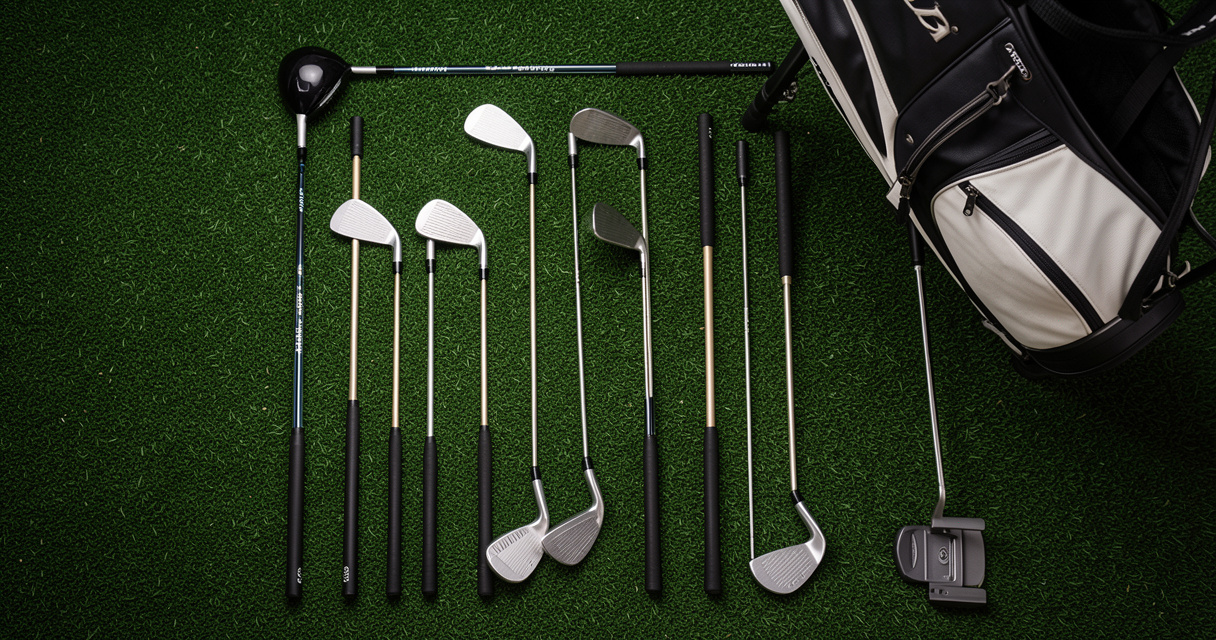
Boxed Set vs Custom-Built Bag vs Pre-Owned: The 2026 Buying Decision
The boxed golf set vs custom built bag argument is the most under-developed topic in intermediate golf writing. Competitors list boxed sets and call it a day. The Reddit threads beg to differ, and they are usually right. Here is the honest three-way comparison.
| Route | Typical Cost Per Club | Shaft Consistency | Gapping Control | Warranty | Resale Value | Best For |
|---|---|---|---|---|---|---|
| Boxed complete set | $55-$100 | Matched but limited flex options | Preset, rarely ideal at the top | Full, 1-2 years | Low, 30-40% after 2 years | Improving beginners, single-purchase buyers |
| Custom-built mixed bag | $90-$180 | Chosen per club to match your speed | Fully controlled by loft chart | Varies per OEM | Moderate, 50-60% | True intermediates with known specs |
| Pre-owned build | $40-$110 | Whatever is available — you adapt | Requires expert judgment | Usually none, some retail 90-day | Holds near what you paid | Value-driven mid handicappers |
Cost per club tells you a lot. A boxed set gets you under $100 per club because the manufacturer is standardizing shafts, grips, and head finish across a huge production run. That is real value. The custom-built route costs roughly double per club because you are specifying components — and it delivers matched shaft flex, matched lie angles, and a proper gap between your 5-iron and your hybrid that a boxed set almost never gets right. Pre-owned sits between them, but only if you know how to shop.
Resale matters too, and it is the factor no competitor mentions. A boxed set loses 60-70% of its value the moment you take it out of the plastic. A custom-built bag with name-brand heads and shafts holds 50-60% for three years. A pre-owned build holds nearly 100% because you bought it at the used market’s clearing price. If you plan to upgrade again in two or three years — and you will — the pre-owned route protects the most capital.
The Pre-Owned Playbook: Condition Grades and What to Inspect
Used golf clubs for intermediate players are the single best value play in 2026, but only if you inspect properly. Here is the checklist I run through any time I buy a used club online.
- Condition grade literacy. “Like New” should be indistinguishable from new. “Very Good” shows light face wear but intact grooves. “Good” has visible sole scuffing. “Average” may have chrome loss and occasional dings. Buy “Very Good” or better for irons and wedges — grooves are the whole game.
- Face and groove wear. On a 7-iron, run a fingernail across the grooves. If it catches cleanly, you are fine. If it slides, the club has hit 500+ buckets of range balls and should be no more than half price.
- Shaft condition. Look for rust, dents, creased paint, or a bent tip. On steel shafts, rust near the hosel is a hard pass. On graphite, any visible fraying or frayed tip is a hard pass.
- Ferrule tightness. If the ferrule has pulled back from the hosel, the club may have been overheated or re-shafted poorly.
- Lie angle verification. Any shop with a loft/lie machine can check in 30 seconds. A 2-degree upright set played by a neutral golfer will cost you strokes on every iron.
- Grip age. Grips are cheap ($5-$10 installed) but budget for a fresh set on any used purchase over two years old.
Where to buy: manufacturer pre-owned programs (Callaway, TaylorMade, Ping) offer graded inventory and occasional 15-25% off sales. Second Swing and Global Golf are established resellers with return policies. eBay works if you know the seller history. Local pro shop trade-in racks are a wild card. Walk the course, you will understand — the same rule applies here. Look with your eyes, not the listing photos.
When a Boxed Set Is Actually the Right Answer
I talk up pre-owned and custom builds, but I will defend the boxed set three times out of ten. If you are a 20-28 handicap, if you have never owned a real set of clubs, if you want one purchase decision and one phone call when something breaks — buy the boxed set. The Wilson Profile Platinum or the Cobra Fly XL will get you through the next two seasons, and you will learn enough about your own swing in that time to make a genuinely informed custom purchase when the boxed set’s limits start to show.
The mistake is buying a boxed set as your “forever” bag at 25 years old. It is not. It is a two-year tool to get you to the place where a proper fit makes sense.
The two upgrades worth making first on any boxed set
Boxed-set wedge lofts and shaft flexes are frequently mismatched to the player. Before you replace any wood or iron, do these two things: (1) replace the sand wedge with a 54 or 56-degree wedge that has 10-14 degrees of bounce matched to your turf; (2) verify the shaft flex against your swing speed. If your driver swing speed is above 90 mph and the boxed set came with senior or ladies flex, you are fighting your equipment. Those two fixes cost under $250 and they will drop your index faster than anything else you can buy.
Whichever route you choose, the same spec checklist decides whether the set will work. Skipping it is the most common reason an intermediate golfer spends $900 and shoots the same scores.
Intermediate Club Spec Checklist: Lofts, Shafts, Gapping, and Setup
Competitors mention club length and weight and then move on. That is not what wins shots. Here are the actual levers — game improvement irons for mid handicappers live or die on these six decisions.
Shaft Flex, Weight, and Swing Speed: The Simple Rule
What shaft flex should an intermediate golfer use? Start with driver swing speed. Under 80 mph: senior or ladies flex, 50-60 gram graphite. 80-90 mph: regular flex, 60-75 gram graphite or 90-100 gram steel. 90-100 mph: stiff flex, 65-85 gram graphite or 100-115 gram steel. Above 100 mph: stiff or X-stiff, and you are probably already fitted.
Weight matters more than flex for most intermediates, and almost nobody tells you this. A shaft that is too light feels whippy and leads to an early release. A shaft that is too heavy slows your swing and robs you of launch. If you cannot feel the clubhead at the top, go lighter. If your hands beat the clubhead to impact, go heavier. It really is that simple, and it is the same advice Hogan would have given you in 1957 — only the gram counts have changed.
Loft Gapping: Two Worked 14-Club Bag Builds
Here are two fully-specified bags you can copy. One targets a $900 budget, the other $1,800. Both respect the 14-club limit and maintain even gaps from driver to lob wedge.
The $900 value build (for a 15-20 index):
- Driver: 10.5 degrees, regular flex, current-generation head, purchased pre-owned — $180
- 3-wood: 15 degrees, regular flex — $100
- Hybrid 1: 19 degrees (replaces 3-iron) — $70
- Hybrid 2: 22 degrees (replaces 4-iron) — $70
- Irons 5-PW: game-improvement cavity-back, regular flex steel — $280 pre-owned
- Gap wedge: 50 degrees, 10 degrees bounce — $60
- Sand wedge: 56 degrees, 12 degrees bounce — $60
- Putter: mallet, face-balanced, pre-owned — $80
Loft gaps: 10.5, 15, 19, 22, 25 (5i), 28, 32, 36, 40, 44 (PW), 50, 56. Roughly 3-4 degrees between irons, 6 between wedges, which is the correct ratio for a mid handicapper who uses driver, hybrids, and putter far more than long irons.
The $1,800 performance build (for a 10-14 index):
- Driver: 9 degrees, stiff flex, current 2025-2026 head — $450
- 3-wood: 15 degrees, stiff flex — $230
- Hybrid: 19 degrees, stiff — $180
- Irons 4-PW: player’s-distance cavity-back, stiff flex, custom lie — $750
- Gapping wedge: 50 degrees, 8-10 bounce — $130
- Sand wedge: 54 degrees, 12 bounce — $130
- Lob wedge: 58 degrees, 8 bounce — $130
- Putter: blade or mid-mallet to your stroke type — $200
Loft gaps: 9, 15, 19, 22 (4i), 26, 30, 34, 38, 42, 46 (PW), 50, 54, 58. Even 4-degree progression through irons, even 4-degree through wedges, which is the pattern most low-mid players build around. Notice the deeper bag carries only one hybrid, because the 4-iron is still playable for this band.
Hybrid vs Long Iron: When to Drop the 4-Iron
How many hybrids should be in an intermediate golf bag? For a 16 and above: two. For a 10-15 index: one, sometimes two if your 4-iron launch is weak. The test is simple — hit ten shots with your 4-iron off a tight lie and ten with a 22-degree hybrid. Count how many finish on the green from 185 yards. The hybrid almost always wins for a mid handicapper, and it usually wins by a wide margin.
I dropped my 4-iron for a hybrid three years ago and have not once missed the iron. My long-approach proximity improved by roughly four feet on average. That is nearly a full shot per round of expected value, and it cost me nothing but the pride of carrying a “proper” 4-iron. The game does not owe you anything, and it certainly does not owe you a forged 4-iron you cannot hit.
One hybrid, one afternoon, four shots saved
A 16-handicap member at my club came out with me on a quiet Wednesday. He was carrying a 4-iron he hated and knew he hated. We spent twenty minutes on the range hitting his 4-iron and my 22-degree hybrid at the same target. His 4-iron averaged 178 yards with a 20-yard spread. The hybrid averaged 181 with a 9-yard spread. He walked into the shop that afternoon and ordered a hybrid, and by August his long-approach shots started finding greens. His words: “I wish someone had made me do this two years ago.” That is not a tip. That is a truth.
Ten-point pre-purchase spec checklist
- Know your driver swing speed (launch monitor or app).
- Know your 7-iron carry distance.
- Confirm shaft flex matches your speed.
- Confirm shaft weight feels right at the top of the swing.
- Check lie angle — upright, standard, or flat.
- Verify grip size against your glove size and hand length.
- Confirm loft gaps between every adjacent pair of clubs.
- Decide hybrid count based on long-iron launch quality.
- Match wedge bounce to your home course turf.
- Match putter head shape to your stroke (straight = mallet, arc = blade).
With the specs settled, the last variable is money. How much should an intermediate actually spend in 2026?
How Much Should You Spend on Intermediate Golf Clubs?
According to Golf Insider UK, budget sets are priced around $300-$500, mid-range sets around $500-$800, and premium sets that grow with the player around $800-$1,200 (2026). Those bands were built for beginners, but they translate almost cleanly to intermediates with one adjustment: the middle band is where intermediate golfers get the most value, and the pre-owned equivalent sits $200-$300 below every tier.
Best golf club sets for intermediate players under $800: the Wilson Profile Platinum and Cobra Fly XL both land in the upper part of that ceiling and give you a full 11-13 club setup. Below $800, a disciplined pre-owned build is your stronger play — but only if you know your specs.
| Budget Band | New Options | Pre-Owned Equivalent | What Improves | Typical Upgrade Horizon |
|---|---|---|---|---|
| $300-$500 | Entry boxed sets, budget iron sets | Full 14-club build, 3-5 years old | Consistent pieces vs. mismatched old set | 1-2 years |
| $500-$800 | Wilson Profile Platinum, Cobra Fly XL, budget iron sets | Name-brand iron set 2-3 years old plus hybrid | Shaft quality, hybrid playability, wedge quality | 2-3 years |
| $800-$1,200 | Ping G710, TaylorMade SIM Max NOS, mid-tier OEM irons | P790, player’s-distance irons, premium wedges | Head forgiveness, CG placement, long-term platform | 4-5 years |
| $1,200-$1,800 | Full custom-built hybrid bag with fitting | Pre-owned tour-adjacent bag with re-shaft | Fitting accuracy, matched flex, tighter gaps | 5-7 years |
What the Extra $300 Actually Buys
Moving from $500 to $800 buys you four specific things, and only the first is marketing. One: better shafts. The shaft is 60-70% of the fitting equation, and it is the first place manufacturers cut cost on cheaper sets. Two: a hybrid that actually launches. Cheap hybrids are hard to hit; good ones are not. Three: a wedge and putter that are not functional-afterthoughts. Four: brand consistency that holds resale value. That fourth one is the least talked about and the most concrete benefit.
Moving from $800 to $1,200 buys you head forgiveness — better moment of inertia, lower and deeper center of gravity, and a face that holds ball speed on off-center strikes. It also buys you a longer upgrade horizon. A G710 or a P790 can genuinely serve you for five years. A $600 boxed set will be limiting you by year three. That is the real math.
Whichever band you choose, confirm live pricing in October 2026 before you pull the trigger. Golf retail pricing on legacy inventory moves in both directions and the difference can be $200 on the same model.
Fitting, Demo Days, and Trade-In: Buying Without Regret
Do I need a golf club fitting if I am an intermediate player? You do not need a $150 tour-level fitting with Trackman and a full bag appointment. You do need a basic one — and honestly, you need it more than a beginner does, because your swing is repeatable enough for the numbers to mean something.
Golf retail inventory for this category is dominated by a handful of brands. Dick’s Sporting Goods lists, in its intermediate-club range, Titleist with 16 models, Callaway with 14, Cobra with 11, PING with 11, Mizuno with 8, and Srixon with 7 (retrieved October 2026). That is a real bias in what you will physically be handed in a store. Comparing across brands before the fitting matters, because most stores will only show you what they stock.
What to Ask For in an Intermediate Fitting
Ask for a 45-minute iron or driver fitting, not a full bag fitting. Ask for a lie board or lie angle measurement at minimum. Ask for the shaft weight in grams and the flex on the printout. Ask how your smash factor compares across two or three heads. Ask for the numbers printed, not verbalized — you want the data in your hand so you can review it later and compare against a second fitter if you want a second opinion.
The five data points to leave a fitting with
Length (in inches, per club if possible), lie angle (in degrees, upright or flat), shaft weight (in grams), shaft flex (regular, stiff, etc.), and grip size (standard, midsize, or undersize). If you do not walk out with those five numbers written down, the fitting did not happen. Everything else is commentary.
Trade-In Math: When Upgrading Beats Replacing
Trade-in credit is the quiet multiplier in intermediate buying. A five-year-old set of name-brand irons typically trades for 20-30% of original MSRP. That is $200-$300 on a $1,000 set. Layer in a demo-day incentive or a manufacturer’s trade-in bonus (usually $50-$150 during spring and fall promotions) and you can move up a full budget band without spending a full budget band’s worth of cash.
Where can you test intermediate golf clubs before buying? Demo days at local clubs, in-store hitting bays with launch monitors (Topgolf, PGA Tour Superstore, and most regional retailers), and outdoor ranges with demo inventory are the three reliable options. Test outdoors when you can. Launch monitors indoors are useful but they cannot tell you how a club feels on real turf, off a real lie, in real wind. Walk the course with the club. You will understand.
Frequently Asked Questions About Intermediate Golf Club Sets
What handicap is considered an intermediate golfer?
Roughly a 12-20 handicap index. Improving beginners sit at 20-28, low-mid players at 8-12. The practical test is consistency of strike and course management, not the number alone. A 20 index who finds the center of the face may need a very different set than a 20 index who misses thin.
Are complete golf sets good enough for intermediate golfers?
Yes at the transition stage. Matched shafts and the simplicity of one purchase are real advantages. The weak points are almost always the wedge lofts, the putter quality, and the shaft flex. Upgrade the wedges first — that is where the strokes hide.
How much should I spend on intermediate golf clubs?
The 2026 bands are roughly $300-$500 for budget, $500-$800 for mid-range, and $800-$1,200 for premium sets that grow with the player. Intermediates get the most value in the $500-$800 new band or a sub-$600 pre-owned build. Confirm current pricing at purchase — legacy inventory moves.
Are TaylorMade SIM Max irons still good in 2026?
They are a legacy model still recommended by several 2026 ranking pages, which makes them a strong value if discounted and still in stock. Verify warranty coverage and compare shaft options against current releases before buying. Above $600, skip them and buy something current.
Should intermediate golfers buy pre-owned clubs?
Often yes. Pre-owned unlocks better shafts and better heads at the same budget. Check condition grades, face and groove wear, shaft rust, and always verify lie angle and length before you commit. The savings are real, but only if you inspect properly.
How many clubs should an intermediate golfer carry?
Up to the 14-club limit, but gapping matters more than count. A driver, one fairway wood, two hybrids, six irons, two or three wedges, and a putter is a common and effective intermediate setup. Two hybrids, in particular, replace the 3 and 4 irons that most mid handicappers cannot launch.
When should I upgrade from beginner clubs?
Three practical triggers. One: your miss has shifted from contact-based (fat, thin) to directional (left, right). Two: your shaft flex is clearly wrong for your swing speed. Three: your wedge lofts and putter are visibly holding back your scoring. If any two of those are true, upgrade.
Four-question upgrade trigger checklist
- Do you consistently find the center of the face?
- Is your typical miss directional rather than fat or thin?
- Does your shaft flex match your current swing speed?
- Are your wedges and putter the limiting factor in your scoring?
Two or more yes answers: new clubs will change your scores. Zero or one: keep playing what you have and spend the money on greens fees.
The Short Version: What Actually Belongs in Your Bag
Four things to carry away from all of this.
First, define your band before you read a single review. The right intermediate golf club set for your handicap and budget depends on your profile, not a brand. A 22 index and a 12 index should not be looking at the same shortlist. If you tick four or more boxes on the self-assessment earlier in this article, you are a true intermediate. Fewer, and you are still climbing.
Second, the buying route matters as much as the set. Boxed sets win on speed. Custom-built mixed bags win on spec accuracy. Pre-owned wins on dollars per unit of performance. Most mid handicappers who buy pre-owned or build a mixed bag end up with a better set for the same money than the boxed-set path would have delivered — but only if they know their specs.
Third, the specs on the paper beat the marketing on the head. Shaft flex, lie angle, and loft gapping change your results more than any new face insert or weighting scheme. Get those three right in a fitting, and any of the irons in this article will work for you. Get them wrong, and none of them will.
Fourth, the budget bands frame the whole decision. Roughly $300-$500, $500-$800, and $800-$1,200 new — with pre-owned sitting $200-$300 under each tier. A fitting plus trade-in credit can move you up a band for less than you expect. The math is friendlier than the sticker price suggests.
So here is the question that should decide everything. Which matters more to you right now: shaving four strokes this season with a better-matched set, or building a bag that still fits you two years from now? If it is the first, buy the best-matched set in your current budget band and go play. If it is the second, slow down, get fitted, and build the bag club by club. Either way, go back to the handicap band section above and place yourself honestly. Because the game does not owe you anything — least of all a bag that fits by accident.

Playing golf since before GPS rangefinders existed. Eddie covers the classic game — courses, technique, and the stories worth keeping.