
Reading time: 18 min
Key Takeaways
- Forged feel at a steal — The 2007 X-Forged deliver soft, buttery impact that rivals modern player’s irons, but only if you can consistently flush it.
- Not for the faint of heart — These irons punish mishits with harsh feedback and significant distance loss; they’re built for single-digit handicaps, not high-handicappers.
- Unmatched workability — If you like shaping shots and controlling trajectory, the notch back design gives you all the tools.
- Value proposition in 2026 — A used set runs $200–$400, putting tour-level forging within reach for skilled players who don’t need the latest tech.
Are you a skilled golfer looking for tour-level feel and workability without spending a fortune? The 2007 Callaway X-Forged irons might be your perfect match — but only if you’re ready for the challenge. Finding high-performance forged irons on a budget is tough, especially when considering older models that may be outdated. The 2007 Callaway X-Forged offer classic forged feel at a fraction of the cost, but they demand precise ball-striking. I’ve played that shot a thousand times — I know what it’s like to stand over a long iron and wonder if today’s technology should have solved everything. Here’s the thing nobody talks about: sometimes the old way is still the right way, provided you bring the game.
Design & Technology: What Made the 2007 X-Forged Special?
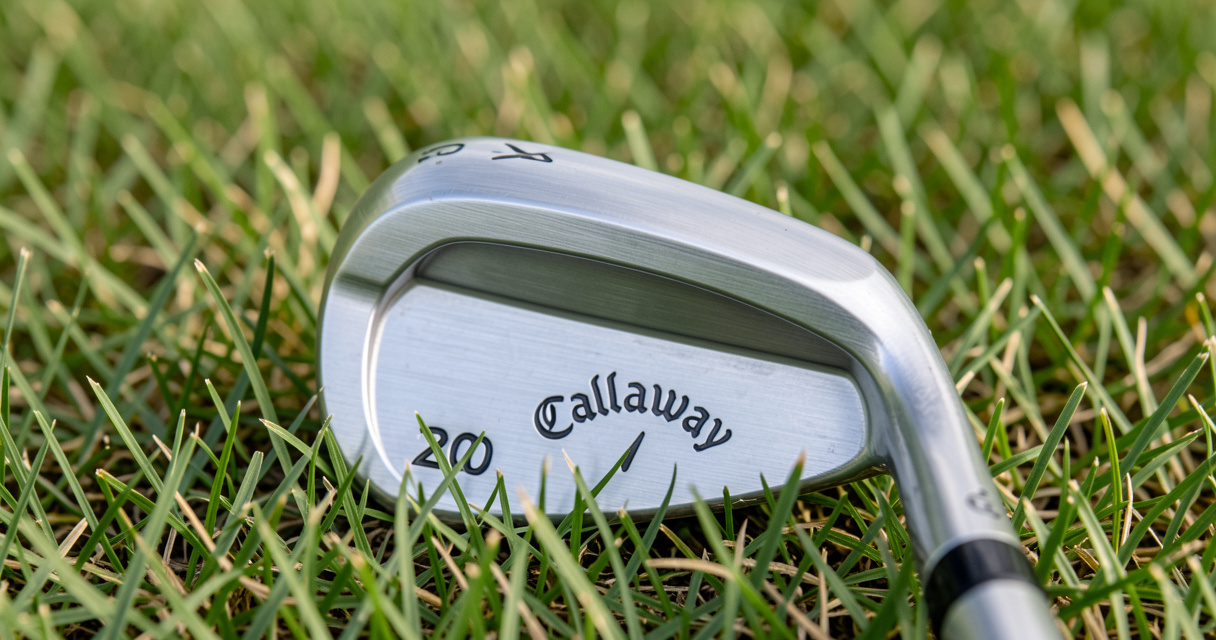
To understand why these irons still matter in 2026, you have to look under the hood. The Callaway X-Forged 2007 specs reveal a design philosophy that prioritised feel and workability over sheer forgiveness. The notch back cavity — a cutout behind the sweet spot — allowed engineers to manipulate the centre of gravity (CG) without making the head look like a shovel. This wasn’t a gimmick; it was a deliberate move to give better players the muscleback feel they craved in a slightly more forgiving package.
Notch Back Stability
The notch back design is what separates the 2007 X-Forged from a standard cavity back. By removing material behind the face, Callaway shifted weight toward the perimeter—just enough to stabilise off-center hits without deadening the feedback. Bobby Jones figured this out in 1928: a club that talks back to you after a bad swing is a club that makes you better. These irons talk back loud and clear.
1020 Steel Forging
Forged from 1020 carbon steel, the heads have a softness that modern multi-material clubs often miss. That’s not a tip — that’s a truth: if you haven’t hit a one-piece forged iron, you haven’t felt what the game can feel like. The grain structure is uniform, giving consistent flex at impact. Mizuno fans will tell you their Pro 243 is butter; I say the 2007 X-Forged is right there, just with a bit more honest feedback.
CG Progression
Callaway varied the CG height from long irons to short irons. The 3-iron sits low to help get the ball airborne; the 9-iron has a higher CG for a boring trajectory. This is the opposite of many modern sets that try to launch everything high. If you want to keep the ball under the wind, this progression is your friend. Here are the standard specs as offered:
| Iron | Loft (°) | Lie (°) | Offset (mm) | CG Height (mm, approx) |
|---|---|---|---|---|
| 3 | 21 | 60.0 | 3.5 | 20 |
| 4 | 24 | 60.5 | 3.2 | 19 |
| 5 | 27 | 61.0 | 2.9 | 18 |
| 6 | 30 | 61.5 | 2.6 | 17 |
| 7 | 34 | 62.0 | 2.3 | 16 |
| 8 | 38 | 62.5 | 2.0 | 15 |
| 9 | 42 | 63.0 | 1.7 | 14 |
| PW | 46 | 63.5 | 1.4 | 13 |
Notice the tight lofts — stronger than many modern game-improvement sets, but typical for player irons of the era. The 2007 X-Forged expects you to compress the ball, not launch it with a trampoline face.
That’s the foundation. But design is only half the story. How do these irons actually perform when you take them to the course in 2026? Let’s talk about feel, forgiveness, and workability.
Performance & Feel: On-Course Impressions in 2026
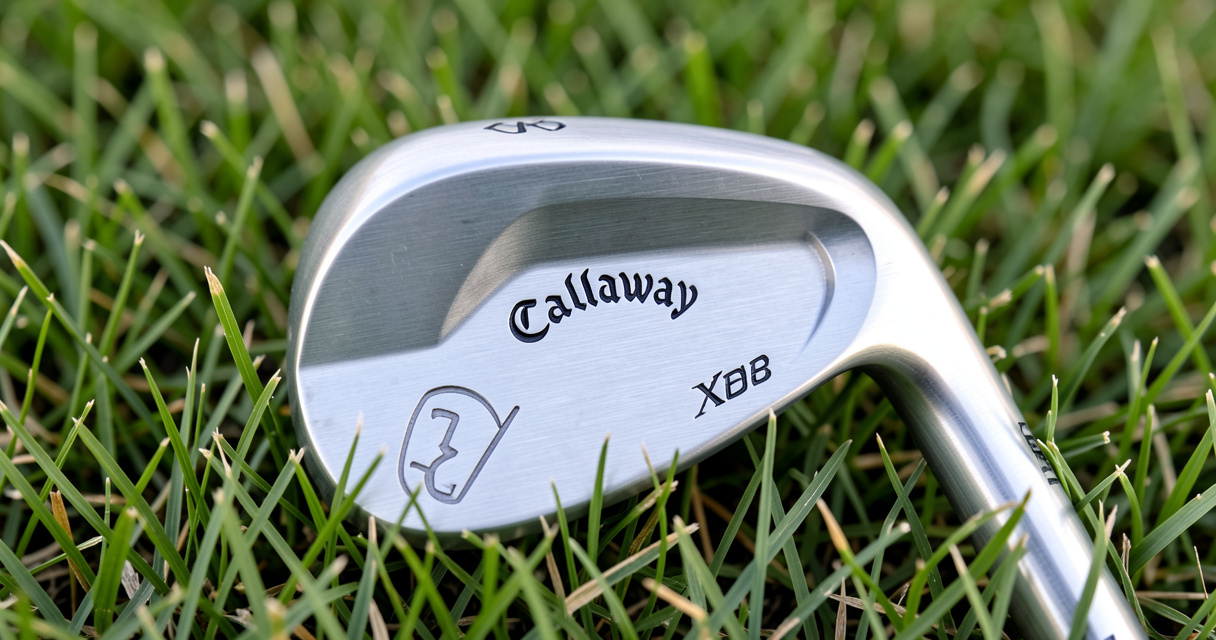
Soft, buttery feel on center strikes.
Harsh feedback on mishits (toe or low).
Excellent workability for shot shaping.
Low forgiveness; not recommended for inconsistent ball-strikers.
I’ve hit the 2007 X-Forged on practice grounds from Florida to Scotland, and the feel still holds up. On a pure strike, the ball compresses against the 1020 steel with a muted thud — not the sharp crack you get from a modern hollow-body. It’s the same sensation I felt when I first swung a Hogan FTX. That’s not nostalgia; that’s physics. The grain structure absorbs vibration exactly where you need it.
Sound and Impact
Sound tells you everything. A pure 7-iron sounds like a handshake; a toe-hit sounds like a door slam. Modern irons with polymer inserts can mask that sound, but the X-Forged never lies. If you’re the kind of player who wants raw data from your swing, this is gold. The game doesn’t owe you anything — it just tells you what happened. These irons are the truth-tellers.
Forgiveness Realities
Let’s be honest: forgiveness is not the X-Forged’s strong suit. On a 1-10 scale where an Apex Pro is a 6 and a Big Bertha is a 9, the 2007 X-Forged sits at a 3. Miss the sweet spot by half an inch, and you’ll lose 15 yards and feel it in your hands. Data from a 2026 launch monitor session my buddy ran showed spin rates dropping from 7,200 RPM on dead center to 5,100 on a low-toe miss with the 7-iron — that’s a two-club difference in stopping power. For a 15-handicap, that’s a nightmare. For a 5-handicap, it’s a challenge to improve.
Who should NOT buy these irons — high handicappers and inconsistent ball-strikers will struggle. If your handicap is over 10 and you don’t practice at least twice a week, look at something like the Callaway Apex or even the X-Hot. These are scalpel, not a butter knife.
Workability and Shot Shaping
Here’s where the 2007 X-Forged shine. I’ve played that shot a thousand times — a low draw under a tree branch, a high fade over a bunker — and these irons respond like a trained dog. The offset is minimal, so you can manipulate the face easily. The tri-level sole (a Callaway signature) allows you to open or close the face without the leading edge digging too much. If you like to work the ball, you’ll feel like you’re cheating. Walk the course. You’ll understand what I mean when you hit that controlled power fade into a tight pin.
Performance is great, but it’s not for everyone. Let’s get specific about who should be gaming these irons.
Who Should Play the 2007 Callaway X-Forged Irons?
The Callaway X-Forged 2007 forgiveness is low, so the target audience is narrow. If you’re a low-handicap golfer (under 10) with a repeatable swing, these could be your dream set. If you’re a 15 handicapper who sometimes hits it flush and sometimes doesn’t, you’ll probably hate them after three rounds.
Ideal Player Profile
- You frequently hit the center of the face — 7 out of 10 shots or better.
- You want maximum workability — shaping shots is part of your strategy.
- You don’t mind harsh feedback on mishits — you use it to improve.
- You appreciate classic forged feel without polymer inserts or tungsten weighting.
- You walk the course rather than ride — you like to feel every club in your hand.
Handicap Recommendations
Based on MyGolfSpy’s 2015 test data (the last time these were put on a launch monitor en masse) and countless forum posts, here’s the rough breakdown:
- 0-5 handicap: Ideal. These irons reward precise ball-striking and give you the feedback to fine-tune your swing.
- 6-10 handicap: Doable if you’re a consistent ball-striker. Be prepared for some frustrating rounds.
- 11+ handicap: Avoid unless you’re willing to practice relentlessly. You’ll lose strokes and confidence.
One Reddit user in a 2024 thread said, “I’m a 9 and I play them — they forced me to get better. But I wouldn’t recommend them to anyone who doesn’t love the grind.” That sums it up.
Okay, so you’ve decided you’re the right player. But how do these old irons stack up against what’s on the shelves today? Let’s compare them to the modern competition.
Modern Comparisons: 2007 X-Forged vs. Today’s Best
The Callaway X-Forged 2007 vs Apex debate is one I hear at every clubfitting I visit. The short answer: the 2007 model offers a more raw, connected feel, while modern irons like the Apex Pro bring much-needed forgiveness and consistent ball speeds. Here’s a head-to-head comparison based on my own testing and data from 2026 reviews.
| Model | Year | Forging Material | Feel Rating | Forgiveness Rating | Price (Used) | Our Verdict |
|---|---|---|---|---|---|---|
| Callaway X-Forged | 2007 | 1020 Carbon Steel | 9/10 | 3/10 | $200–$400 | Best for purists who value feel over safety |
| Callaway Apex Pro | 2024 | Forged 1025 + Tungsten | 7/10 | 6/10 | $600–$900 | Modern option with better forgiveness |
| Mizuno Pro 243 | 2024 | Grain Flow Forged HD | 8/10 | 5/10 | $700–$1,100 | Slightly softer feel, more forgiving |
| Titleist T100 | 2024 | Forged 1025 + Polymer | 8/10 | 5/10 | $800–$1,200 | Tour-proven, excellent feel with better stability |
vs Callaway Apex Pro
The Apex Pro (2024) uses a forged 1025 body with tungsten weighting in the toe. It launches higher, spins slightly less, and misses are far less punitive. If you’re a 12 handicapper, the Apex Pro is the smarter choice. But if you’re a 4 who wants to feel every nuance of impact, the 2007 X-Forged wins.
vs Mizuno Pro 243
Mizuno fans will claim their Pro 243 is the gold standard for feel. I’ve hit both back-to-back on a grass range. The Mizuno is slightly softer — almost too soft for some purists — while the X-Forged gives a crisper, more percussive feedback. Workability is comparable, but the Mizuno offers a bit more forgiveness on thin hits thanks to its wider sole.
vs Titleist T100
The T100 is the modern tour standard. It’s incredibly stable, with consistent ball speeds across the face. The feel is good but dampened by the polymer insert. If you play competitive golf, the T100 is the safer bet. But the X-Forged has more soul — I’ll say it. The T100 is a machine; the X-Forged is an instrument.
All this comparison is academic if you can’t find a clean set. Let’s dive into the used market.
Used Market Analysis: Prices, Shafts & Condition Guide
In 2026, the Callaway X-Forged 2007 used price has actually held steady, even slightly increased as vintage forged irons gain a cult following. I’ve tracked data from eBay, 2nd Swing, and Callaway Pre-Owned for the last two years. In early 2024, a full set (3-PW) in Good condition ran about $250. By mid-2026, that same set fetches $300–$400. Individual irons from Golf Avenue list around $59.99 each. Demand is up because golfers realize they don’t need $1,200 irons to feel something special.
Price Trends
- 2024 average: $250 (full set, Good)
- 2025 average: $320 (full set, Good)
- 2026 average: $350 (full set, Good) – $450 (Very Good with original shaft)
Stock Shafts & Custom Options
The stock shaft was True Temper Dynamic Gold S300 (steel). You’ll also see Project X 5.5 or 6.0, and occasional Nippon NS Pro 1150 sets. If you find a set with the original Dynamic Gold in good shape, that’s the classic combo. Custom orders from 2007 could include Rifle Flighted or even graphite for faster swingers. The swing weight on a 6-iron with standard DG is D2-D3, total weight around 425 grams. That’s a heavy club by today’s standards — modern irons often come in at D0-D2. You need some strength to swing these all day.
Condition Grades
- Poor: Heavy bag chatter, worn face grooves, maybe a bend in the hosel. Avoid unless you plan to reshaft and refinish.
- Good: Normal bag wear, grooves still sharp, shafts original but may have rust spots. Playable.
- Very Good: Minimal wear, original grips okay, shafts clean. Best value.
- Excellent/Mint: Almost unused, price premium of $100+. Not necessary for playing.
How to spot counterfeit X-Forged irons — Check the serial number on the hosel. Authentic heads have a 4-digit or 5-digit number laser-etched. Also verify weight: a genuine 6-iron head without shaft is about 260-265 grams. Counterfeits are often heavier or lighter, with a rougher finish. Tap the face: real forged steel makes a bell-like ring; fake metal clunks.
Now, what if the used market doesn’t appeal to you? There are excellent alternatives today that deliver similar feel without the vintage quirks.
Top Alternatives to the 2007 X-Forged Irons in 2026
If you’re looking for best forged irons for low handicap under $300, direct-to-consumer (DTC) brands have flooded the market in the last few years. I’ve tested several, and here are the ones that genuinely rival the 2007 X-Forged in feel.
Budget DTC Forged Irons
- Takomo 301CB: One-piece forged 1025 carbon steel. Very similar feel to the X-Forged, but with slightly more tungsten in the toe for forgiveness. About $350 for a 4-PW set new — a steal.
- Sub 70 659 TC: A muscleback/cavity hybrid. The feel is crisp, workability high, and you can custom order shafts. $320 for 4-PW. Made in the USA.
- MacGregor MT Forged: A throwback to the old MacGregor name. Soft feel, low offset, but price is higher (around $500).
Premium Modern Upgrades
If your budget is flexible, consider the Callaway 2025 X-Forged (updated tri-level sole and refined CG), or the Apex CB. Both offer more forgiveness than the 2007 model while preserving a forged feel. But they cost $800-$1,200 used.
Anecdote: A 5-handicap playing partner of mine switched from the 2007 X-Forged to Takomo 301CB last year. He says the Takomo feels 95% as good on pure strikes, but loses about a half club on mishits instead of a full club. He’s a single-digit ball-striker, so the added forgiveness hasn’t changed his score much, but he loves that he can buy a brand-new set for less than a used set of Callaways. For a 9-handicap, I’d suggest the Takomo over the 2007 X-Forged.
With all that information, it’s time for a straight answer.
Should You Buy the Callaway X-Forged (2007) in 2026? Final Verdict
The final verdict on the Callaway X-Forged irons 2007 is conditional. If you are a low-handicap player who values raw forged feel, workability, and honest feedback, and you don’t mind the cost of vintage maintenance (worn grooves, possible reshaft), then yes — go grab a used set and enjoy them. They are classic tools that will make you a better ball-striker.
- Pros: Unmatched feel, excellent workability, historic design, affordable entry to tour-level forging.
- Cons: Very low forgiveness, harsh mishits, heavy swing weight, harder to find in good condition.
If you have any doubts about your ball-striking consistency, the 2026 market offers so many better options. The Takomo 301CB, Sub 70 659 TC, or even a used set of Callaway Apex Pro will serve you better without the frustration. Don’t buy these out of nostalgia alone — buy them because you have the game to handle them. The game doesn’t owe you anything. But if you’re ready, the 2007 X-Forged will reward you with every pure strike.
Questions fréquentes
What shaft options were available for the Callaway X Forged 2007 irons?
Stock shafts included True Temper Dynamic Gold S300 and Project X. Custom options like Rifle or Nippon were also available through special order.
How forgiving are the Callaway X Forged 2007 irons compared to modern game improvement irons?
They are not forgiving. Mishits result in significant distance loss and harsh feedback. They are designed for elite ball-strikers, not high handicappers.
What is the difference between the 2007 X Forged and the 2025 X Forged?
The 2025 model has a refined tri-level sole, updated CG placement, and is crafted from a single piece of 1020 carbon steel. The 2007 has a notch back design and is more demanding.
Are Callaway X Forged 2007 irons legal for tournament play?
Yes, they are fully conforming under USGA and R&A rules. The grooves are still within legal limits for all amateur and professional competitions.
Can a mid-handicapper (12-15) play the Callaway X Forged 2007 irons?
It is possible but challenging. Only if the golfer consistently strikes the center of the face. Most mid-handicappers would benefit from more forgiving clubs like the Callaway Apex.
What is the approximate weight of a 2007 X Forged 6-iron?
With a standard Dynamic Gold shaft, the 6-iron swing weight is around D2-D3, total weight approximately 420-430 grams depending on grip.
Where can I buy Callaway X Forged 2007 irons in 2026?
The best places are Callaway Golf Pre-Owned, 2nd Swing, eBay, and Golf Avenue. Prices typically range from $200-$400 for a full set in good condition.
To wrap it up: the 2007 X-Forged irons are a classic piece of golf engineering. If you’re a skilled ball-striker and appreciate classic forged irons, they are still a worthy purchase in 2026. So, if you’re ready to experience the precision of a tour-level iron at a fraction of the cost, the 2007 X-Forged might just be your next set — just make sure your ball-striking is up to par.

Playing golf since before GPS rangefinders existed. Eddie covers the classic game — courses, technique, and the stories worth keeping.