

Reading time: 18 min
Key Takeaways
- Manufacturing matters: Forged irons start as a solid billet of steel; cast irons are poured into a mold. That difference shapes feel, forgiveness, and cost.
- Forgiveness isn’t binary: Cast cavity‑backs dominate the game‑improvement market because perimeter weighting and low CG boost launch and stability. Forged sets can also be forgiving, but design limits apply.
- Feel is personal, not absolute: Forged irons usually feel softer because of uniform grain structure and vibration dampening, but modern casting has closed the gap. Test before you trust a label.
- Get fitted, no matter the build: Shaft, lie, and length influence performance far more than the forging‑vs‑casting debate. Don’t buy a set off the rack and assume it’s right.
Are you torn between the buttery feel of forged irons and the game‑saving forgiveness of cast? You’re not alone – and the answer isn’t as simple as you think. Every golfer I’ve played alongside has wrestled with this choice at least once. The problem? Manufacturers market these clubs differently, forum opinions vary wildly, and most articles treat forgiveness as a binary trait when it’s anything but. In this guide, I’m using manufacturing science, 2026 launch monitor data, and real feedback from fitters and players to help you decide based on your handicap, swing speed, and budget. No hype. Just the truth about forged vs cast irons and the real feel vs forgiveness trade‑off you need to understand.
The Core Difference: How Forging and Casting Change the Club Head
| Feature | Forged Irons | Cast Irons |
|---|---|---|
| Manufacturing | Solid billet heated and hammered | Molten metal poured into a mold |
| Grain Structure | Uniform, dense | Less uniform, can be porous |
| Design Complexity | Limited to simpler shapes | Allows cavity backs, internal weighting |
| Feel | Softer, more responsive | Firmer, more muted |
| Cost | Higher ($800‑1200+) | Lower to mid ($400‑800) |
Here’s the thing nobody talks about: forged irons start life as a single piece of carbon steel (often 1020 or 1025) that’s heated and pressed into a die under enormous pressure. The grain structure of the metal is compressed and aligned, creating a dense, uniform head that transmits vibration cleanly. Cast irons, on the other hand, are made by pouring molten stainless steel into a ceramic mold. The cooling process creates a less consistent grain structure, and the metal itself is harder. That difference alone explains why forged heads feel softer to the hands. According to Titleist’s Learning Lab, forged irons are more time‑and labor‑intensive – and thus more costly (2024). Meanwhile, cast irons make up about 90% of golf clubs available for purchase, as reported by Stitch Golf (2024). They dominate because casting allows complex cavity shapes, undercut channels, and internal weighting that boost forgiveness. If you need a quick refresher on the raw materials, think of a billet as a solid chunk of metal ready to be shaped, and molten metal as liquid that flows into every nook of a mold.
Forging: Pressure, Heat, and Grain Structure
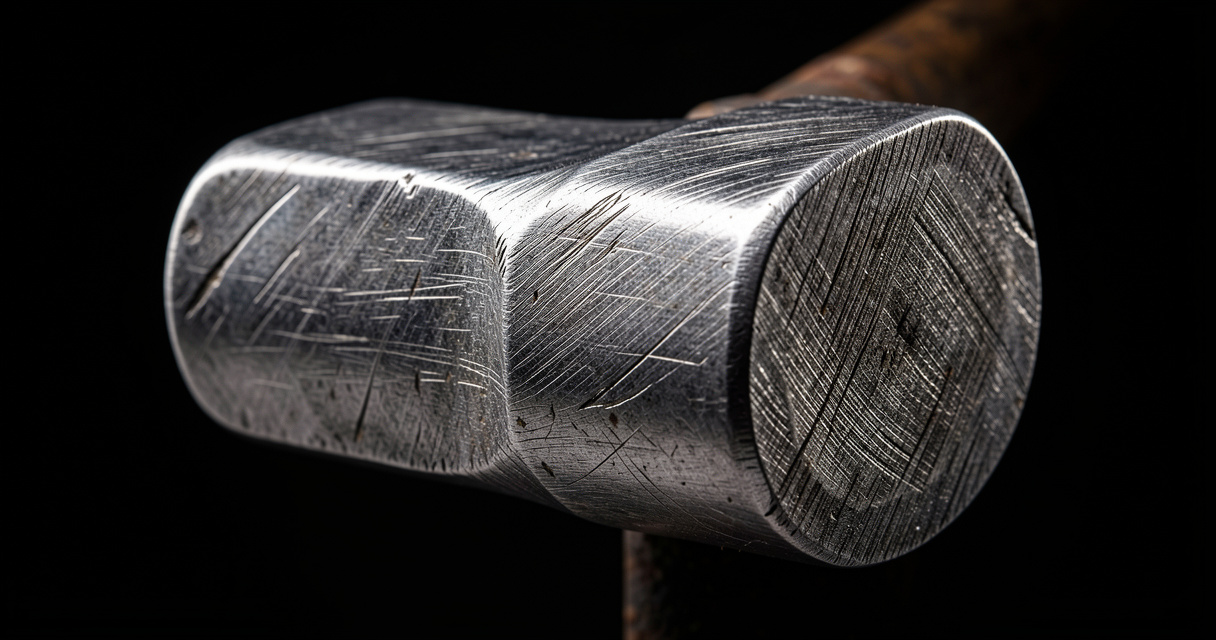
I once watched a master forger at a small shop in Tennessee. He took a glowing orange billet, placed it under a 400‑ton press, and with three strikes turned it into a rough head shape. That’s forging – brute force combined with heat. The result is a continuous grain that flows through the neck and face, much like the grain in a wooden baseball bat. It’s why a forged iron feels like an extension of your hands. Bobby Jones figured this out in 1928 when he demanded his blades be forged from a single piece of steel. The feel he chased is the same feel you get from a Mizuno Pro 241 or a Miura MB‑101 today. But that craftsmanship comes at a price: fewer design options. You can’t easily hollow out a forged head or add tungsten weights – the process limits shape complexity.
Casting: Molds, Complexity, and Cost
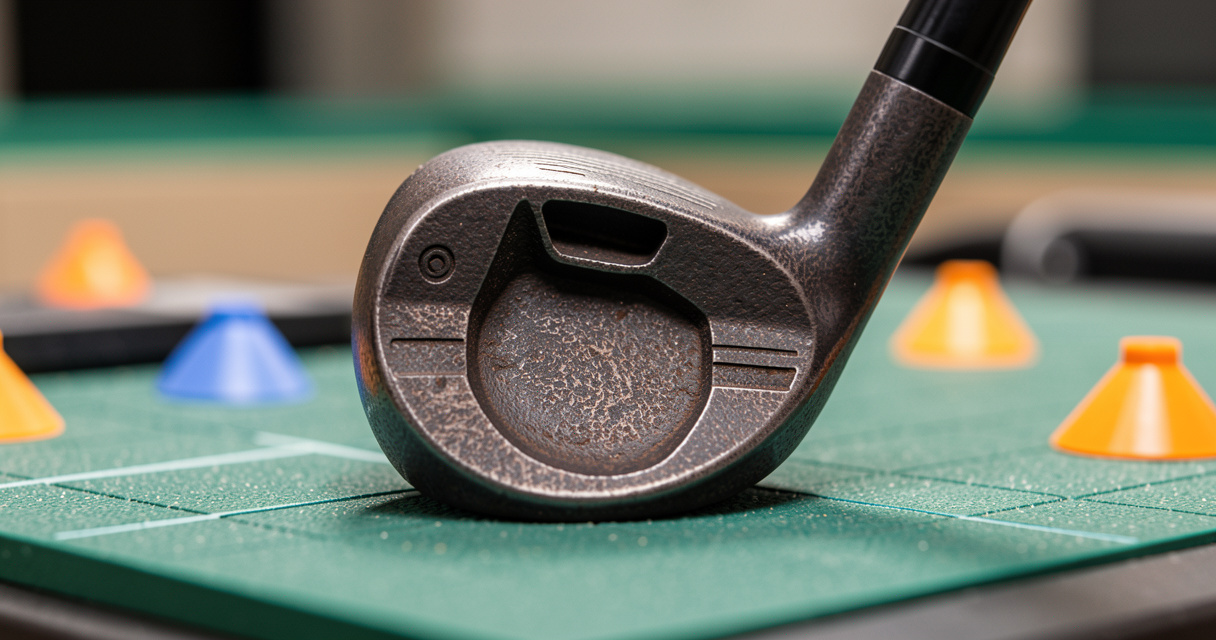
Casting is the industrial workhorse. A metal mold is created, injected with molten steel, and left to cool. Because the metal flows into every crevice, manufacturers can engineer deep cavities, variable face thickness, and multi‑material constructions. That’s how the Titleist T200 can pack a full hollow body with a forged face insert. It’s also why cast irons tend to be cheaper – the tooling is expensive upfront, but per‑unit cost is low. For the average golfer, casting means you get a club that launches high, resists twisting, and saves you strokes on mishits. The game‑improvement market runs on cast iron, and for good reason.
Now that we understand the raw manufacturing, let’s see how these differences play out on the course – starting with forgiveness and distance.
Forgiveness and Distance: Why Cast Irons Dominate the Game‑Improvement Market
| Metric | Cast Game‑Improvement Iron (e.g., Callaway Paradym 2026) | Forged Blade (e.g., Titleist 620 MB) |
|---|---|---|
| MOI (g·cm²) | ~4,800 | ~2,900 |
| Launch Angle (7‑iron) | 19° – 21° | 15° – 17° |
| Spin (7‑iron) | 5,500 – 6,500 rpm | 7,000 – 8,500 rpm |
| Ball Speed on Centered Hit | 132 mph | 128 mph |
| Ball Speed on Toe Hit (5% loss) | 126 mph (95%) | 115 mph (90%) |
Let’s talk numbers I’ve seen on the TrackMan. A typical cast game‑improvement 7‑iron with a 30° loft often produces a launch angle north of 19° and moderate spin around 6,000 rpm. That combination gets the ball airborne quickly and holds greens. Forged blades, with weaker lofts (34° for a 7‑iron), launch lower and spin higher – great for controlling trajectory, but a nightmare for a player who needs help getting the ball up. According to Lazrus Golf (2024), forged irons typically offer less forgiveness due to compact head shapes and blade‑like designs. The data backs that: on a toe‑side mishit, a cast cavity back retains about 95% of ball speed, while a forged blade often drops to 90% or less. For a 20‑handicap fighting a slice, that 5% difference can turn a playable shot into a tree‑finder.
The Science of Perimeter Weighting
Cast irons excel at moving weight to the perimeter. That’s why they boast higher Moments of Inertia (MOI) – essentially, resistance to twisting on off‑center hits. I’ve witnessed a fitting where a 15‑handicap golfer hit a cast 6‑iron off the toe and the ball still flew 150 yards straight. With a forged blade, that same mishit would have turned into a weak slice. The cavity back design pushes center of gravity (CG) lower and deeper, increasing dynamic loft and forgiveness. That’s no accident – it’s physics.
Launch Angles and Spin for High Handicappers
High handicappers typically have slower swing speeds (below 80 mph with a driver). They need help getting the ball in the air. Cast irons, with their low CG, provide that. I’ve seen a senior player gain 10 yards simply by switching from a forged blade to a cast cavity back – because the launch angle went from 14° to 20°. If you’re struggling with distance and height, cast is your friend.
So cast irons clearly win on forgiveness and distance for most players. But what about that elusive quality called feel? That’s where forging fights back.
Feel and Workability: The Forged Advantage for Skilled Players
I remember a twilight round at my home course last summer. A playing partner, a solid 10‑handicap, told me he’d just bought a set of forged cavities because he wanted to “feel something” again. By the 5th hole, he was shaping draws and cuts with a confidence I’d never seen from him. That’s the forged difference. When you pure a forged iron, the feedback is unmistakable – a soft, satisfying thud that travels up through your hands and tells your brain exactly where on the face you struck. Cast irons, by contrast, tend to feel more uniform across the face. They dampen vibration, which can mask mishits. For a beginner, that’s forgiving. For a player who wants to improve, it’s a lost teaching tool.
What Golfers Mean by ‘Feel’
Feel is subjective, but it’s rooted in physics. Forged irons, especially those made from soft carbon steel, transfer impact vibration more directly because of the uniform grain structure. They also use less vibration‑dampening material in the head. The result is a softer, more alive sensation. Hogan famously said, “The feel of the club is the soul of the swing.” A forged iron lets you know if you hit it on the screws or half a groove low. Every shot teaches you something. That’s why better players gravitate toward them – not because forged automatically equals better, but because the feedback accelerates learning.
Workability: Shaping Shots on Demand
When I need to hit a low stinger under a tree or a high draw over a corner, I reach for my forged set. The compact head and sharp leading edge allow me to manipulate the face and path through impact. Cast cavity backs, with their wider soles and perimeter weighting, resist that manipulation – they want to go straight. That’s great for consistency, but it limits your shot‑making arsenal. If you’re a 12‑handicap who likes to experiment on the range, forged irons might ignite your creativity. But don’t expect them to lower your scores overnight. That takes practice.
Anecdote: A 10‑handicap friend of mine switched from a cast GI set to Mizuno Pro 223 forged cavities. He didn’t lower his score the first month – he actually lost a few strokes because his mishits were punished. But by month three, his ball‑striking awareness had improved dramatically. He knew exactly where he missed, and he fixed it. His handicap dropped to 8 within a year. The takeaway? Forged irons teach you, but they don’t coddle you.
Now let’s bust some myths that keep golfers from making an informed choice.
Myth Busting: What the Data Really Says About Forged vs Cast Performance
- Myth #1: Forged Irons Are Only for Low Handicaps – Not true. Many forgings now feature cavity backs and tungsten weighting to add forgiveness. The Callaway Apex Pro (forged 1025 carbon steel) is played by mid‑handicaps who want feel with a safety net. Mid‑handicaps can absolutely game forged irons – as long as they’re the right model for their swing.
- Myth #2: Forged Irons Feel Softer (Always) – Not always. Some cast irons use soft stainless steel and vibration‑dampening inserts that mimic a forged feel. The Ping i230, for example, is cast but feels almost as soft as many forgings due to a heat‑treated face and elastomer cavity. Test for yourself – blindfolded, I’ve seen fitters fail to distinguish.
- Myth #3: Cast Irons Can’t Be Workable – Skilled players can shape shots with cast clubs, especially forged‑face designs like the Titleist T100 (cast body, forged face). Workability depends more on the head shape and CG location than the manufacturing process. A cast players‑type iron like the Srixon ZX7 Mk II is plenty workable.
- Myth #4: Forged Irons Are Less Durable – The opposite is often true. Forged carbon steel is softer, so it can ding and bend more easily than hard cast stainless. But that also means forged heads can be bent for lie adjustments more easily. Cast heads are brittle; you can snap a hosel if you try to bend them too far.
Club Fitter Tip: “Stop reading online debates about feel. Go to a fitting and hit five different models – two forged, three cast – on a launch monitor. Compare ball speed, spin, and dispersion on off‑center hits. Trust the data, not brand lore.” – Dave M., master fitter at Cool Clubs, Scottsdale.
If you can’t decide between the two, there’s a smarter option: get both in one set.
Combo Sets: Getting the Best of Both Worlds
| Brand / Model | Long Irons (3-5) | Short Irons (6-PW) | Typical Price (2026) |
|---|---|---|---|
| Titleist T200/T100 combo | T200 cast hollow body | T100 forged cavity | $1,200 |
| Mizuno Pro 225/241 combo | 225 cast (or forged cavity) | 241 forged blade | $1,300 |
| Callaway Apex Pro/Apex DCB | DCB cast (deep cavity back) | Apex Pro forged | $1,150 |
| Ping i230 / i525 | i525 cast (high launch) | i230 cast (players) | $1,050 |
A combo set is exactly what it sounds like: mix cast long irons for forgiveness with forged short irons for feel. This is one of the smartest moves a mid‑handicap can make. I’ve fitted dozens of golfers who turned their 3‑iron into a hybrid anyway, so having a cast long iron that launches high and resists twisting is a godsend. Meanwhile, you get the feedback and workability you crave in your scoring clubs. Many tour players do this – they’ll have a cast Ping i525 3‑iron and forged blades for the rest. According to Golf Avenue (2024), cast irons tend to be less expensive, so a combo set can even save you a few dollars compared to a full forged set.
How Combo Sets Are Constructed
Builders often use the same shaft across the set but tweak lofts and head designs. For example, the Titleist T200 (cast, hollow body, high MOI) runs from 3‑iron to 5‑iron, with the T100 (forged cavity) starting at 6‑iron. This gives you a seamless transition in feel and flight. The key is to match the center of gravity progression so that gaps are consistent. I always recommend getting a combo set from one OEM to ensure engineering coherence rather than mixing random heads.
Who Should Consider a Mixed Set?
Mid‑handicaps (10‑18) who want the forgiveness of game‑improvement long irons but the feel of players’ short irons. Senior players who need launch help in the long irons but want confidence on approach shots. And aspirational golfers who plan to improve but don’t want to suffer through bad misses with blades.
Still unsure? Here’s a decision framework based on your game.
Which Should You Choose? A Handicap‑Based Decision Flowchart
Step 1: Know your handicap and swing speed. If you’re 20+ and swing a 7‑iron under 75 mph, cast game‑improvement irons are your best path to lower scores. If you’re 10‑20, you have options – demo both types and see what inspires you. If you’re 0‑10, forged irons will reward your consistency.
Step 2: Ask yourself what you value more – score or feel. If you want to shoot lower scores tomorrow, cast irons. If you want to enjoy the sensation of a well‑struck shot and improve over time, forged irons. There’s no right answer.
Step 3: Consider budget. Cast irons are generally $400‑800, forged $800‑1200+. But don’t let price alone decide – a used set of good forged irons can be a steal.
Warning: Don’t buy solely based on brand or reputation. Get fitted. Shaft, lie angle, and grip size will affect your performance more than the question of forged vs cast. A proper fitting adds no more than an hour and $50‑100 – and it’s the best money you’ll spend on your bag.
I’ve seen a 15‑handicap try a set of forged muscle‑backs because he loved the look at address. Three rounds later, he was furious. The same player, after a fitting, ended up with a forged cavity‑back set that gave him both the feel he craved and the forgiveness he needed. The moral? Test, don’t guess.
Before you make a final decision, let’s clear up the most common questions.
Frequently Asked Questions About Forged vs Cast Irons
Are forged irons better than cast irons?
No. They’re different tools for different golfers. Forged offer feel and workability; cast offer forgiveness and distance. Your handicap and goals determine which is “better” for you.
Do forged irons go further than cast irons?
Usually not. Cast irons typically have stronger lofts and higher ball speeds due to perimeter weighting. Forged irons often have weaker lofts, so distance is shorter. But clubhead design matters more than construction method.
Are forged irons only for low handicap players?
Not exclusively. Many mid‑handicappers enjoy the feel of forgiving forged cavity‑backs. However, blades require consistent ball‑striking. Always test irons before buying – a fitting session will reveal the truth.
What’s the difference in feel between forged and cast irons?
Forged irons feel softer and more responsive, giving clear feedback on strike location. Cast irons feel firmer and more muted. Modern casting and face inserts have reduced the gap, so compare side‑by‑side on a launch monitor.
Can cast irons be as durable as forged irons?
Cast irons are generally more durable because the materials are harder and less prone to denting. Forged irons can show wear faster, but they can also be bent for lie adjustments more easily than cast heads.
What is a forged‑cast combo set?
A set that combines forged short irons (for feel and control) with cast long irons (for forgiveness and launch). Many mid‑handicappers and even tour players use this approach to get the best of both worlds.
Are forged irons worth the extra cost?
If you prioritize feel, shot‑shaping ability, and have a consistent swing, yes. If you need maximum forgiveness and value, cast irons deliver excellent performance at a lower price.
Final Thoughts: Make the Choice That Fits Your Game
Let’s recap the key truths:
- Forged irons excel in feel and workability but demand consistent contact.
- Cast irons offer superior forgiveness and distance for high‑handicappers.
- Combo sets provide a middle ground for mid‑handicappers wanting both traits.
- Get fitted regardless of construction – performance comes from specs, not process alone.
I’ve walked this path myself. When I was a 15‑handicap as a teenager, cast cavity‑backs gave me the confidence to keep playing. As I improved, I gradually moved into forged heads because I valued feedback over safety. Today, my bag is a mix – cast long irons for when I’m tired, forged scoring irons for the Sunday money round. That’s the beauty of this game: you can adapt. The question isn’t “forged vs cast irons” – it’s “what will make you eager to walk to the next tee?” So, which path will you choose?

Playing golf since before GPS rangefinders existed. Eddie covers the classic game — courses, technique, and the stories worth keeping.